Q2 Target Zero Harm: Patient Safety From the Frontlines
Target Zero Harm is on Inside Carilion and in the ePulse every quarter to keep you in the know about the great work that's happening systemwide to keep our patients and team members safe—and how you can help! Check it out and watch for other stories that demonstrate our commitment to quality and patient and staff safety.

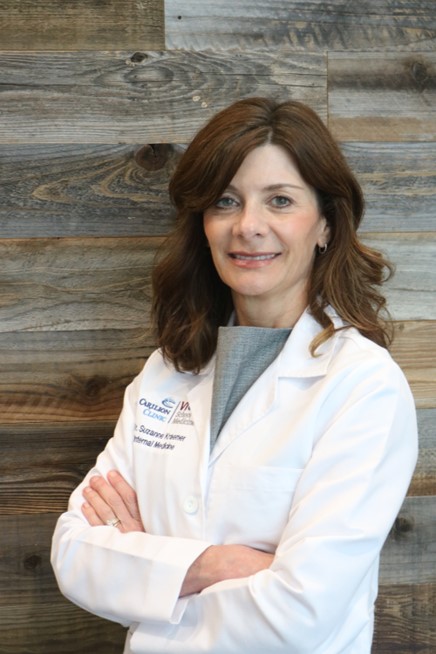

"July 1 of each year marks the welcome of new residents and fellows. In this issue of Target Zero Harm we focus on Graduate Medical Education and its positive impact for patients across the Carilion Clinic health system. Dr. Arthur Ollendorff, MD, the Carilion Clinic Designated Institutional Official and Vice President of Academic Affairs discusses patient safety at the frontlines and describes how our learning culture and quality outcomes are supported by our residents and fellows. It is well known that hospitals with strong Graduate Medical Education programs are associated with enhanced quality of care, better patient access and an improved hospital reputation (Ref 1). Several examples are highlighted in this issue of Target Zero Harm. Please take a moment to read this article and welcome a new resident or fellow to Carilion and our community!"
Suzy Kraemer, MD Chief Quality Officer and VP Clinical Advancement and Patient Safety, Hunter Choate, DNP, VP Clinical Advancement and Patient Safety and Internal Medicine

Our Graduate Medical Education Program
Every summer a new class of residents and fellows joins us from medical schools and programs all over the country and world, bringing different experiences, backgrounds and perspectives. They round out our Graduate Medical Education Program (GME) that includes about 340 residents and fellows in 30 programs across multiple disciplines.
Our residents and fellows train in our hospitals for several years—and they happen to be essential to improving quality of care to keep our patients safe.
Why? It turns out, there are many reasons.
“There are few places in the hospital you can go where you don’t interact with a resident or fellow,” says Dr. Arthur Ollendorff, Carilion’s Designated Institutional Official and Vice President of Academic Affairs.
Because residents and fellows are on the frontline, they spend a lot of time with patients, handling orders and different procedures related to their care, which presents the perfect opportunity for observation and inquiry.
“The beauty of residency is they recognize they are in a learning environment and ask why we do it this way,” says Dr. Ollendorff.
Living our core value of curiosity is the foundation for asking questions that lead to building better processes and finding solutions that improve quality of care and patient safety.
Since residents are earlier in their medical career, they also have a clean slate for learning so it’s easier for them to change habits. Additionally, they come from other places where things are done differently, and they can draw from those experiences.
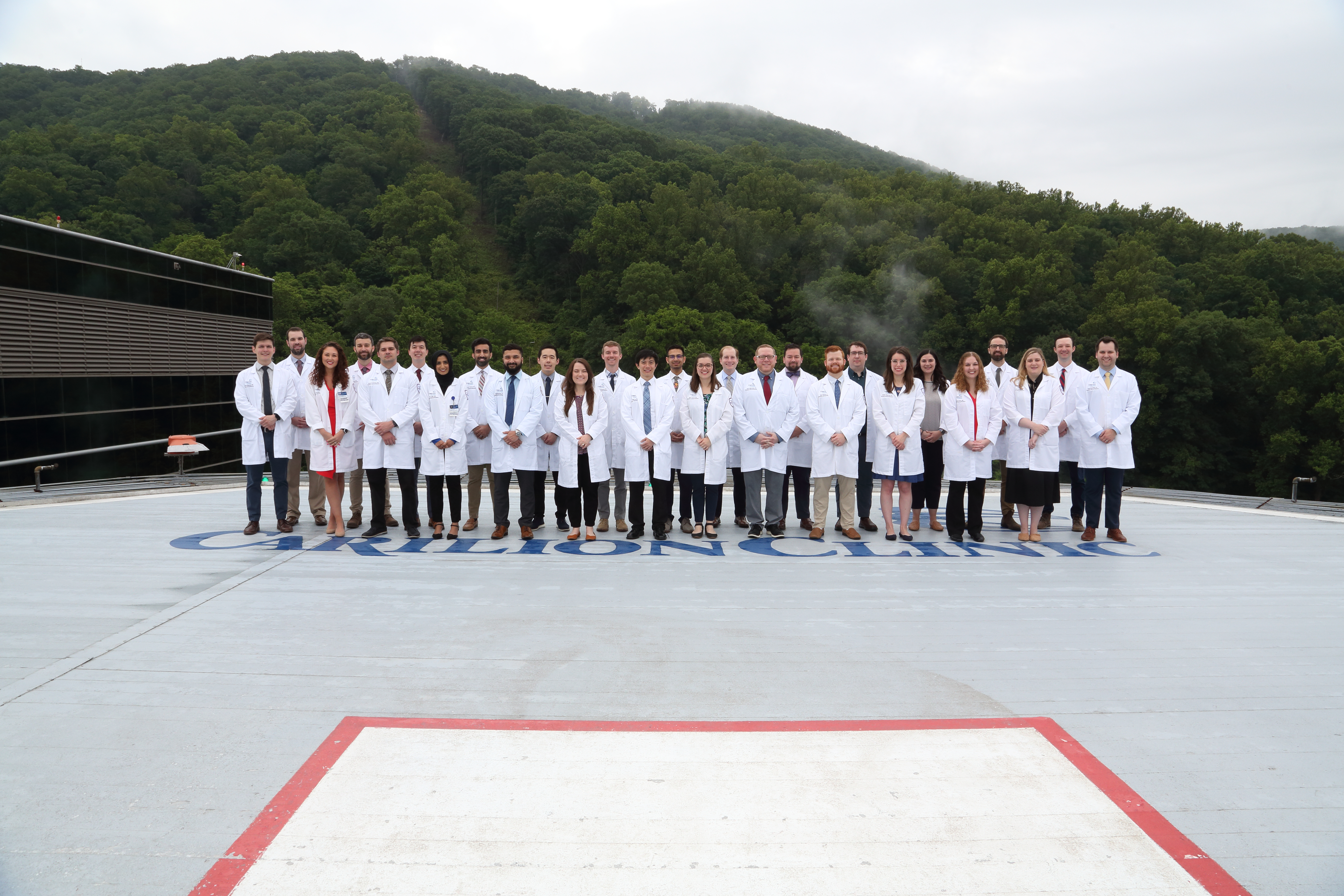
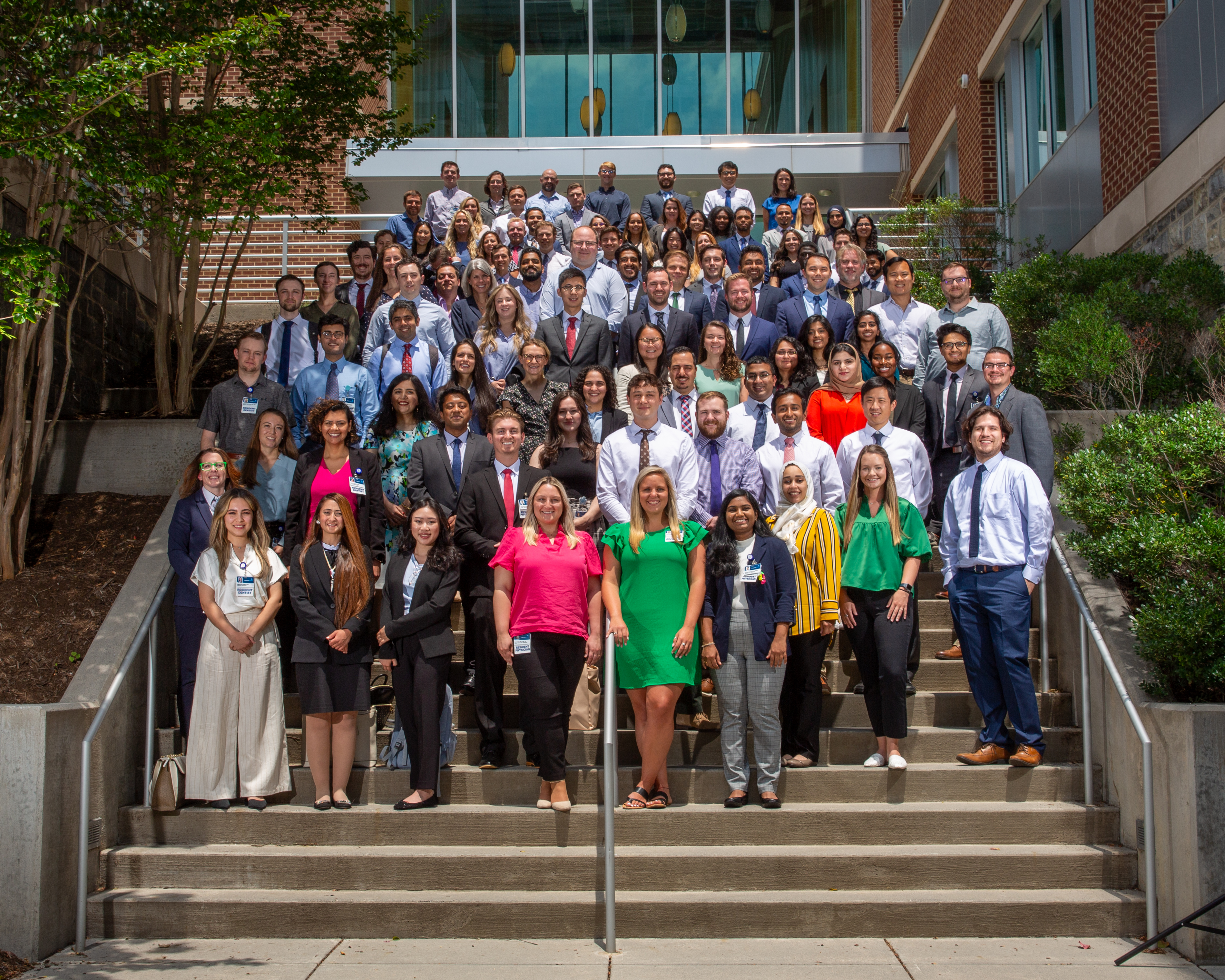
2023 GME graduates 2024 new residents and fellows
Connecting Quality to Residency
The Graduate Medical Education Committee (GMEC) is the internal governing body for GME. The goal of the GMEC Quality Subcommittee is to connect the work that’s happening in Clinical Advancement and Patient Safety (CAPS) and make it applicable to what residents are doing every day.
The once project-driven committee has shifted its focus to how residents will connect CAPS to their programs and move best practices into the different settings and structures where residents work.
“Residents work with so many people in different disciplines, departments and settings as they are training for their specialty, so they’re actually really good connectors,” says Dr. Ollendorff. “They’re learning how to be part of the system, the solution and a really good part of the team.”
Improving Performance
GME has played a significant role in building a foundation for success. Here are a few examples.
- CAUTI: To ensure that urine cultures are ordered appropriately, an evidence-based urine culture guideline was developed. This work originated with the GME Quality Committee.
- CLABSI: At orientation residents are trained in proper insertion techniques for central lines at the Center for Simulation, Research, and Patient Safety. This high-fidelity training combined with bedside discussions of when to insert and remove central lines has established an excellent foundation for low rates of CLABSI events at our hospitals.
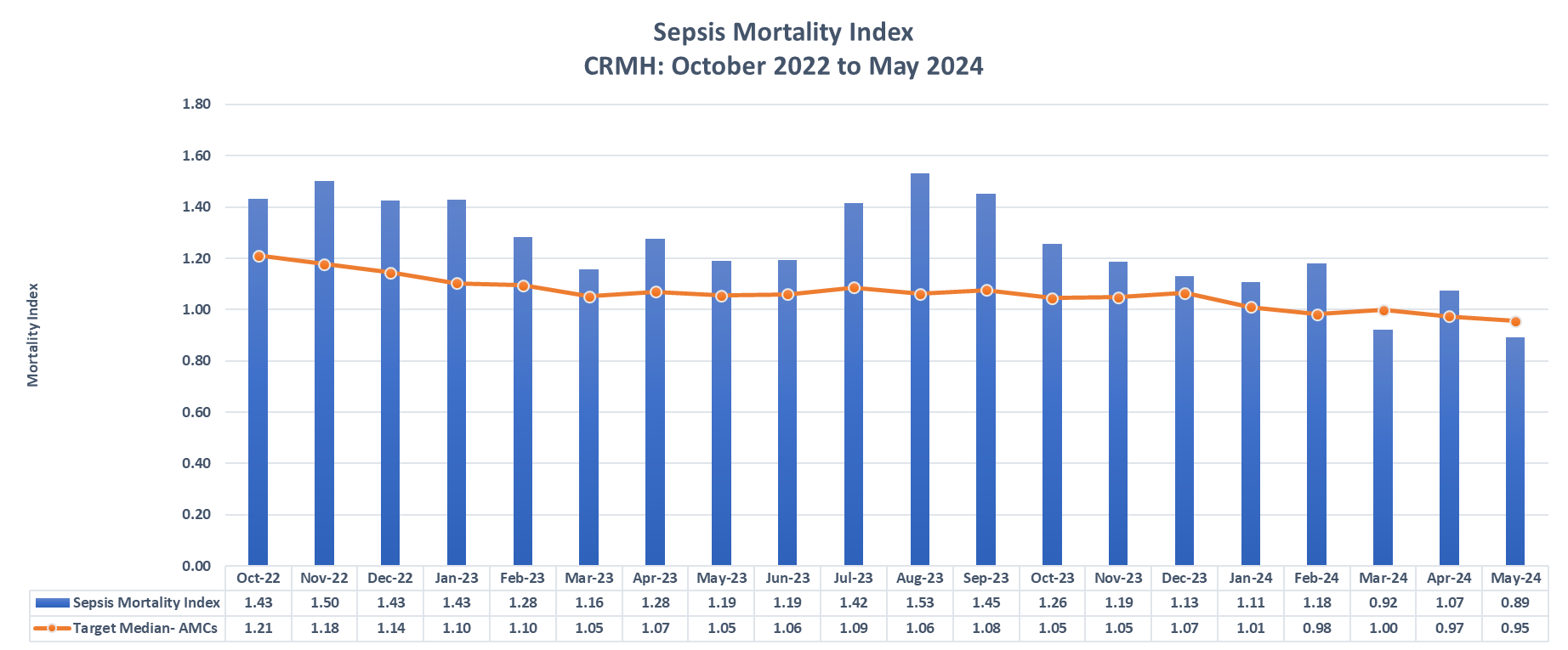
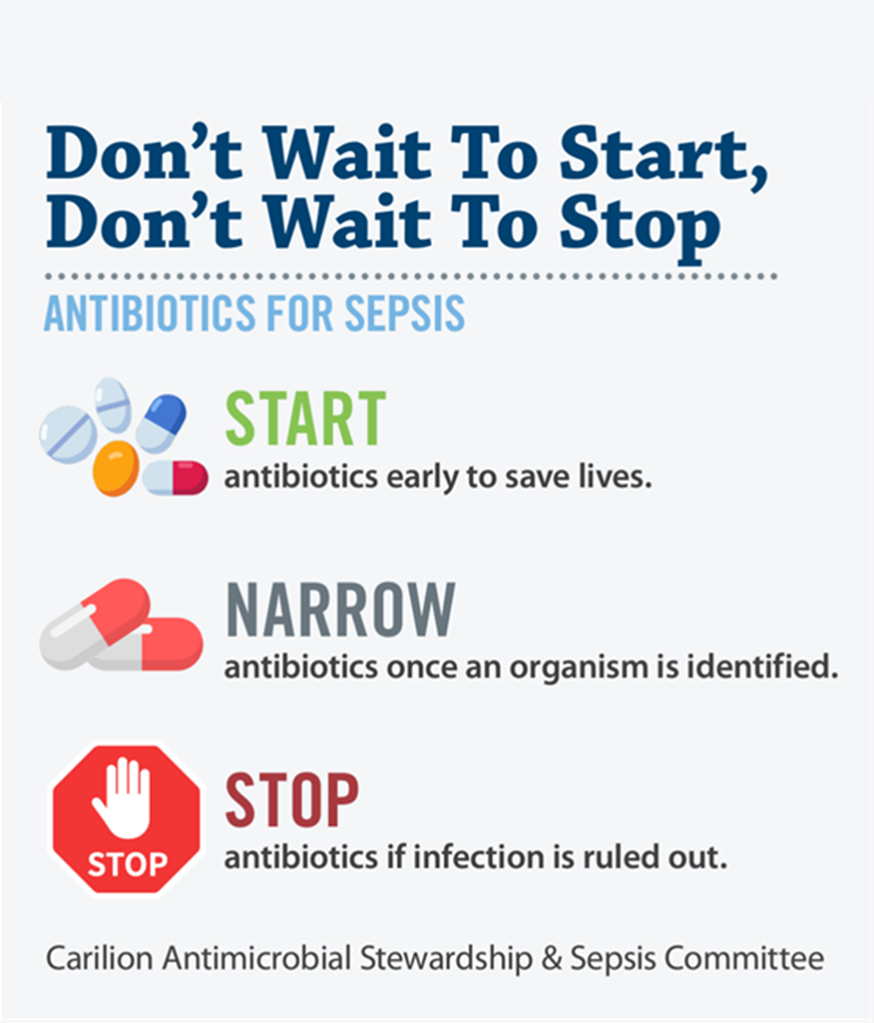
- Sepsis: Residents and fellows are taught to use the sepsis order sets. Since they are on the frontline with our patients many hours throughout the week, our residents and fellows have been instrumental in our dramatic improvement in preventing a death from sepsis, as shown below. The flyer hung throughout our hospitals keeps early treatment for sepsis top of mind.

AHA Quest for Quality: Our three-day trip to the AHASummit was packed with high points, but our favorite moment had to be accepting our Quest for Quality finalist award! It was an honor to be recognized by the American Hospital Association as a national quality leader—a reflection and validation of our entire health system's commitment to providing access to exceptional quality, patient-and-family-centered care. Check out our LinkedIn post.
Great Catches: We gave a number of Great Catch awards during the past few months. Reporting potential errors or process issues before they can harm patients helps us improve our systems and processes to keep patients safe.
Southwest Virginia's Highest Ranked Hospital: U.S. News & World Report ranked CRMH "Best Hospital" in the region and CRMH tied for third in the state (up from fourth). CRMH was also recognized as high performing in 16 procedures and conditions, and CNRV earned high-performing status in three categories.
If you have any questions or content suggestions for Target Zero Harm, contact Shawn Blackwell, CAPS Process Improvement, at sablackwell@carilionclinic.org.
References:
-
Association of Graduate Medical Education With Hospital Performance and Patient Outcomes
Radoslav Zinoviev, MD, MBA1,2; Harlan M. Krumholz, MD, SM3,4,5; Kevin Pirruccio, BA6; et al
JAMA Netw Open. 2021 Feb 1;4(2):e211827. doi: 10.1001/jamanetworkopen.2021.1827. PMID: 33630079