Clean Hands Save Lives!
With the continued downward trend in the number of new COVID-19 cases in our community and a welcomed return to normalcy, it might seem like we could loosen up on hand hygiene. The truth is, exercising good hand hygiene is as important now as ever!
There are a number of reasons why all of us—whether we work in a clinical or non-patient-facing environment—should keep hand hygiene top of mind. Reducing the risk of infection tops the list.
Because hand hygiene is vital to providing excellent patient care and is a priority for our organization, we asked some of our executive leaders to share their thoughts on the subject.
President and CEO Nancy Howell Agee
“I understood the importance of hand-washing long before I entered nursing school. As a young child, my mother always told me to wash my hands so I wouldn’t get sick. Today, there’s plenty of research to support what my mom taught me—hand-washing is one of the most important steps we can take to avoid getting sick and spreading germs. It’s also the single most effective way to reduce health-care-transmitted infections.”
Health care workers’ hands are the most common mode for transmitting bacteria, viruses and other microorganisms that can cause disease. Practicing excellent hand hygiene promotes a safe environment for our patients, care team members and anyone who enters our campus.
Executive Vice President and CMO Patrice M. Weiss, M.D.
“I can’t stress the importance of hand hygiene enough. We know that washing hands for at least 15 seconds removes germs and prevents illnesses, which is especially important to protect people with weakened immune systems."
Germs from unwashed hands are transferred to other objects and can get into foods and drinks, creating even more opportunities to spread them.
“Clean hands are everyone’s responsibility. Whether you work in patient care areas or in non-patient areas, it’s up to all of us to reduce the spread of germs.”
CNO Meg Scheaffel
Excellent handwashing promotes patient safety and a healthy work environment. Recently, during The Joint Commission triennial hospital accreditation survey, hand hygiene was an important focus. Our hand hygiene efforts and results are included in the Leapfrog hospital safety assessment.
“Leapfrog provides feedback on best practices for hospitals to follow when it comes to patient safety. By following the standards set by the CDC based on evidence-based practice, we can be sure we are providing appropriate and safe patient care as it relates to hand hygiene."
Nursing Senior Director, New River Valley, Kristi Hall
"If you think about it, health care providers must wash their hands many, many times a day. It becomes a habit—a good one—that plays such an important role in patient safety."
These 5 moments for hand hygiene are a good reference to remember all the opportunities that proper hand hygiene should be performed. You can download this poster by visiting the downloads section below.
How We're Doing
Our hand hygiene committee continues to make sure there are proper hand-washing supplies in all of our locations, which includes:
- Placing dispensers in convenient locations
- Ordering products from the warehouse
- Restocking soap and hand towels
- Maintaining dispensers
- Research on product safety
- Education about how to properly wash hands
The hand hygiene committee is made up of employees from various departments and works to make everyone aware of the importance of preventing the spread of infection through proper hand-washing. They meet monthly and are always welcoming new members! If you’re interested in participating, contact the infection preventionist for your area to get involved.
Qualtrics Online Reporting Tool
Since launching the online Inpatient Hand Hygiene Reporting Tool, recorded observations have greatly increased.
- Hand hygiene compliance has consistently been maintained at 99%. Previously, it averaged 80%.
- Observations at CMC increased from 12,500 in 2020 to 110,000 in 2021.
- The total number of observations in 2021 were 136,560, higher than the previous four years combined.
Before the online reporting tool was launched, meeting the LeapFrog requirements for hand hygiene observations was a challenge. Now our system is exceeding observation requirements thanks to collaborations from many teams including quality, EVS, Materials Management, frontline staff, Infection Prevention and Control, nursing leadership and others.
This tool is currently available at CMC and in the nursing unit at CNRV, with plans to roll it out to additional areas in the near future.
What You Can Do
-
Remember hand hygiene is one of the greatest ways to prevent infections and prevent contamination when doffing PPE and working with patient care equipment—it's the foundation to providing excellent patient care!
-
Stay up to date on hand hygiene guidelines. Last year, LeapFrog updated the average number of required monthly observation submissions. You can keep track of the requirements for your area on the Inpatient Hand Hygiene information page.
-
Follow proper hand-washing practices and download the 5 Moments for Hand Hygiene poster below.
Questions?
Contact Angela Slough, Infection Prevention, at amslough@carilionclinic.org.
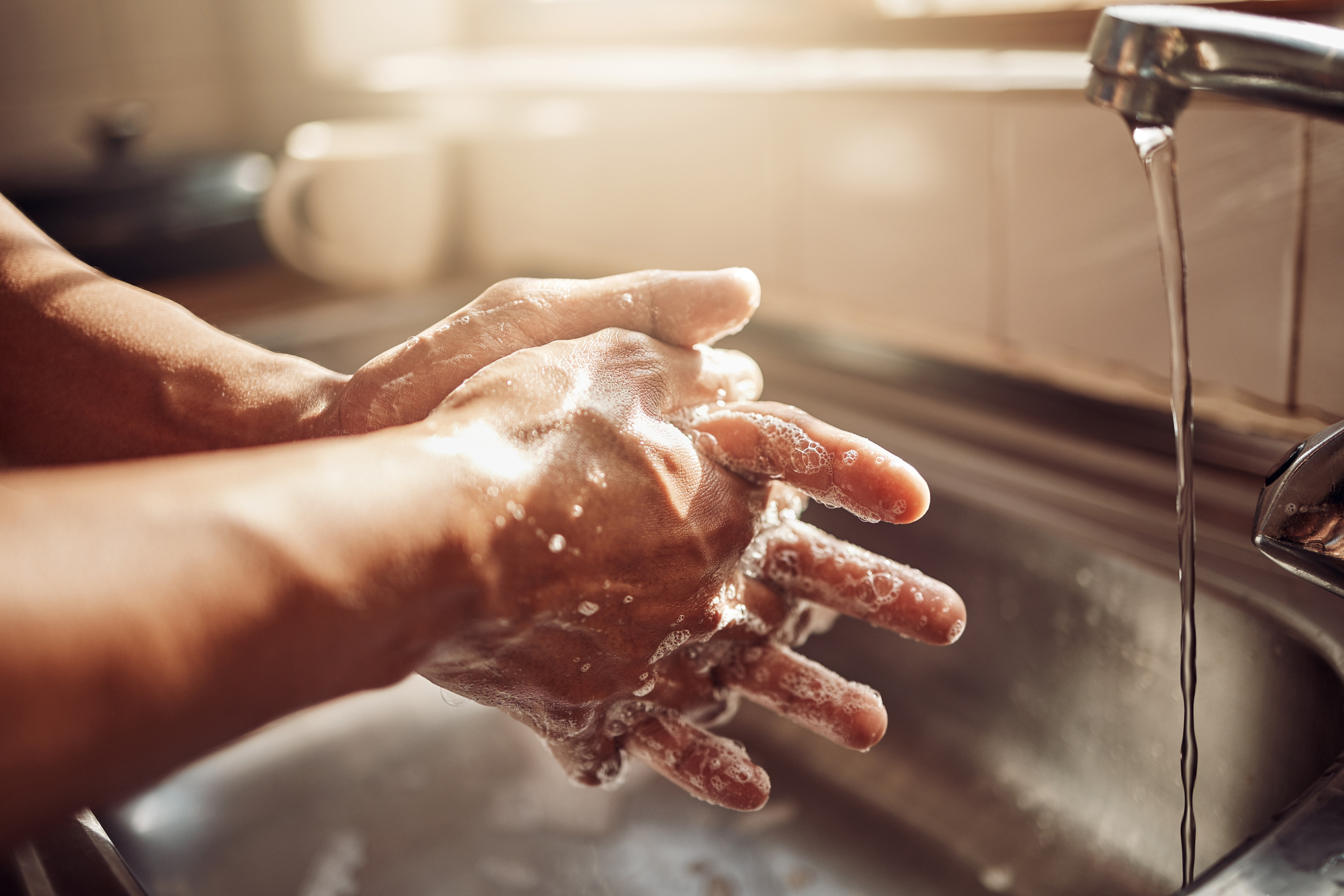
Hand hygiene is the best way to reduce health-care-transmitted infections.
Hand hygiene is the foundation for excellent patient care and a requirement among employees for reporting agencies.
Since the launch of the digital tool to make recording hand hygiene observations easier, compliance has significantly increased.
