Celebrating Our Focus on Hand Hygiene
At Carilion, we focus on hand hygiene 365 days a year. However, earlier this month, teams across the system got creative to highlight its significance on World Hand Hygiene Day.
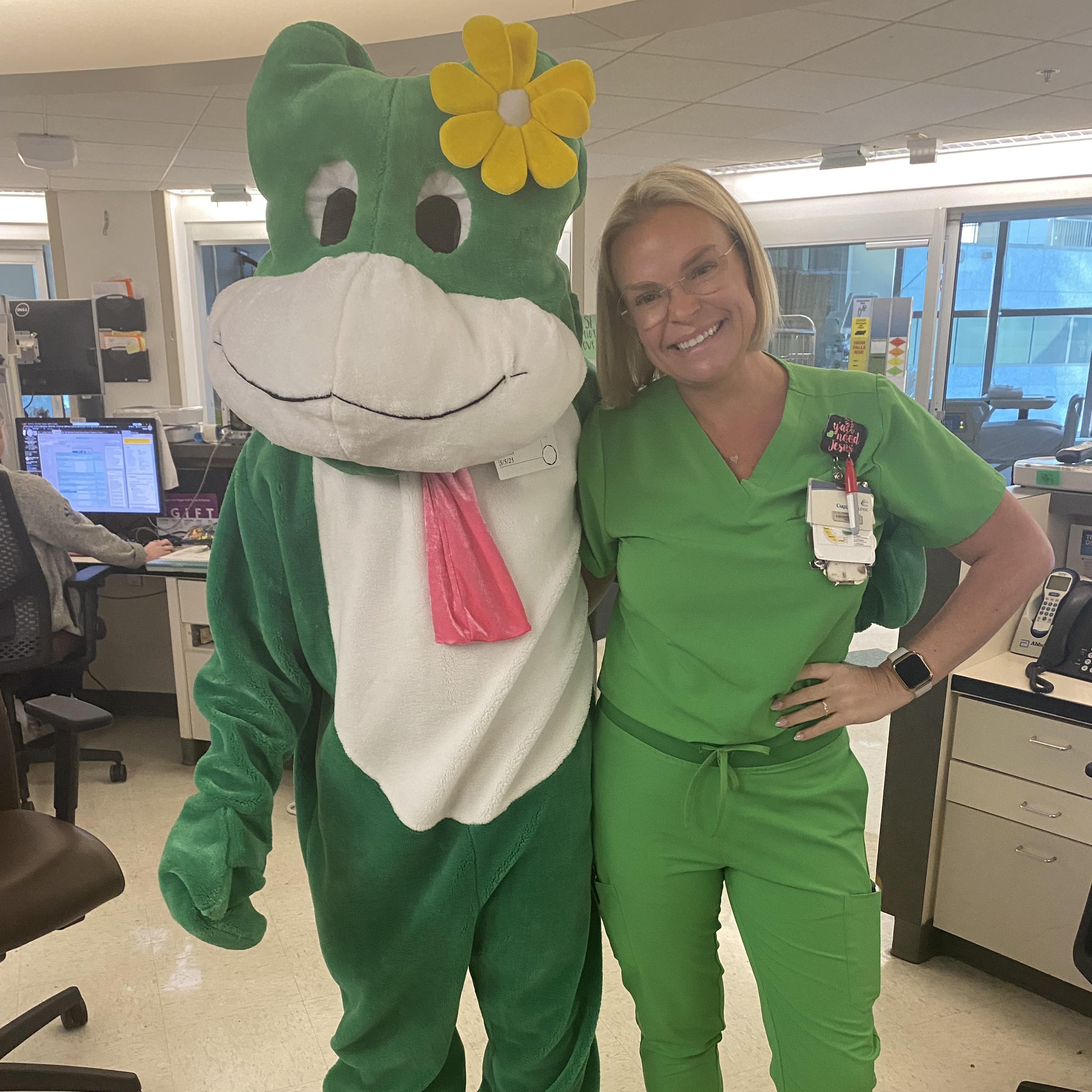
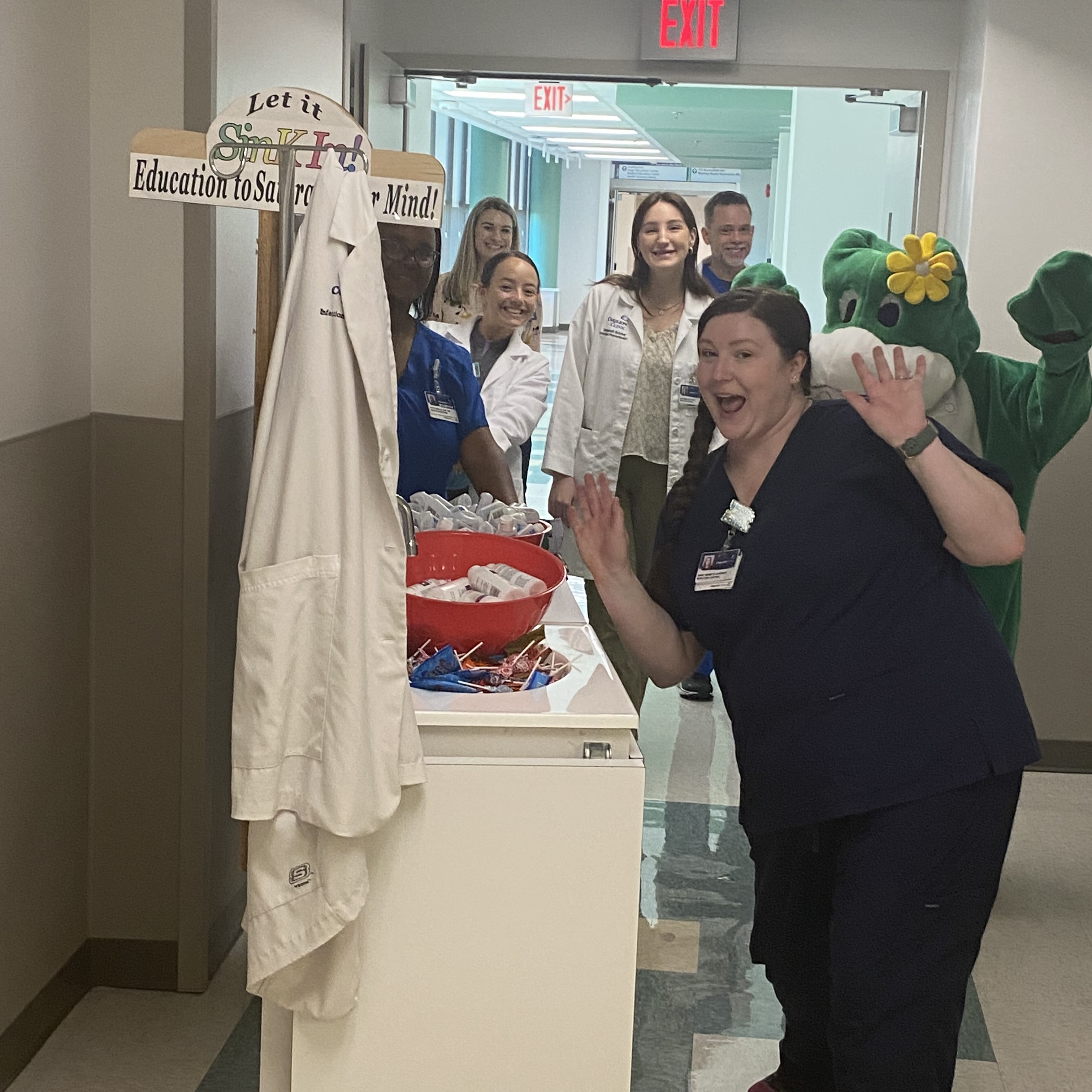
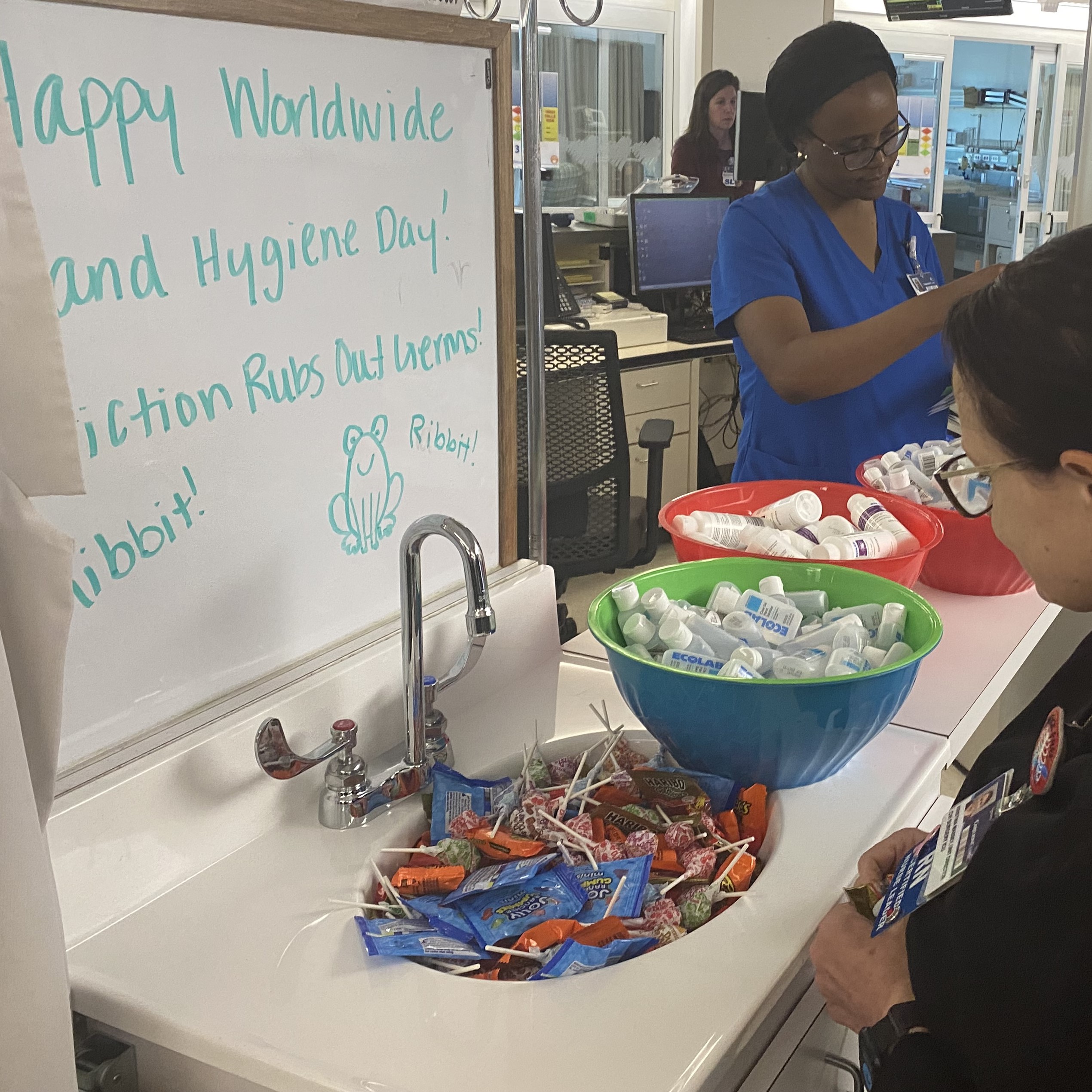
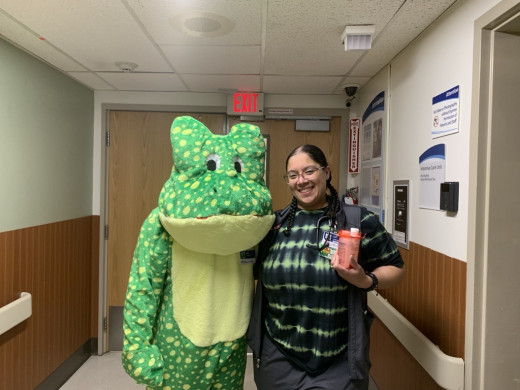
- CRMH: FROG Paddy accompanied Infection Prevention and Control friends on several units where they handed out candy, sanitizer and lotion, and asked employees hand hygiene-related questions for additional prizes.
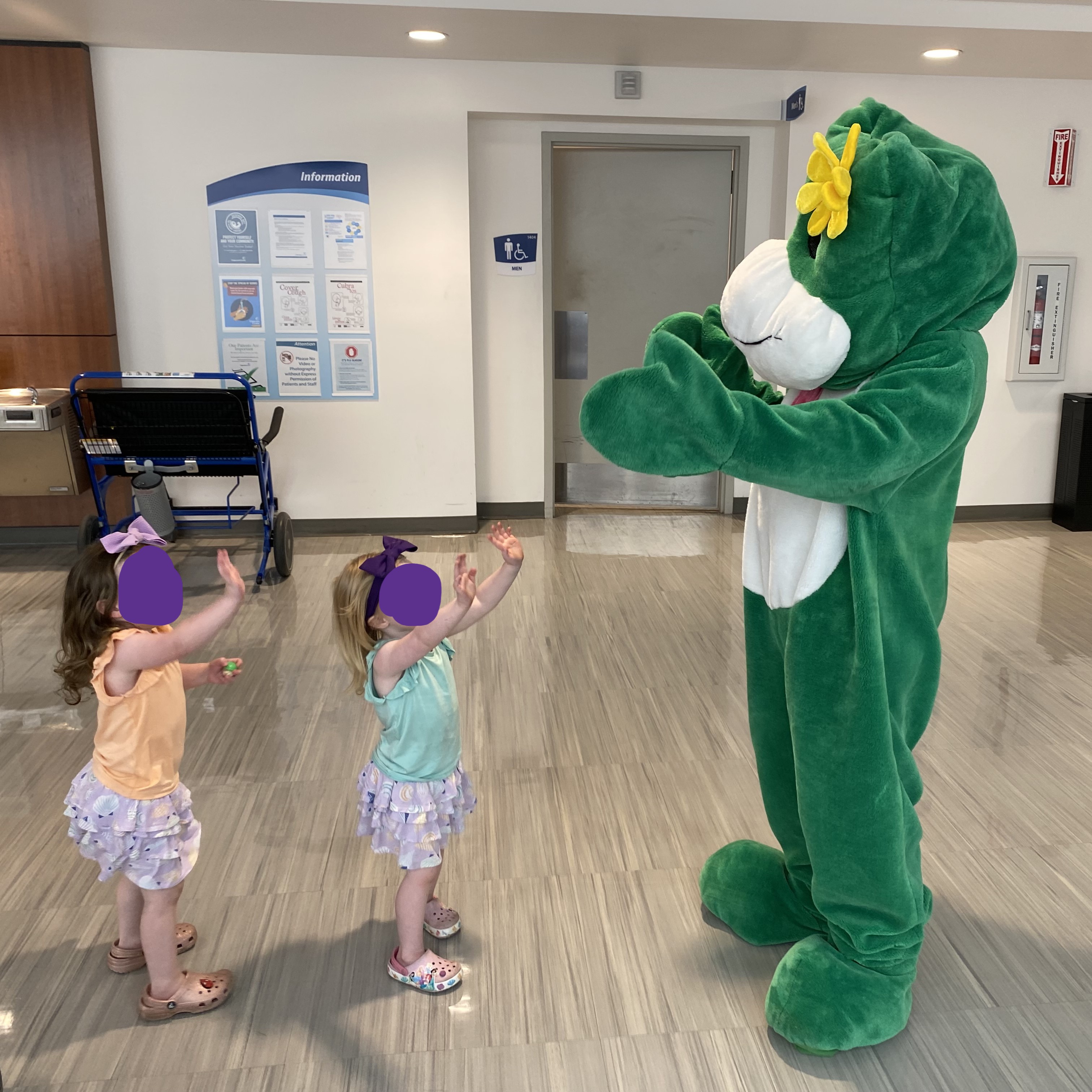
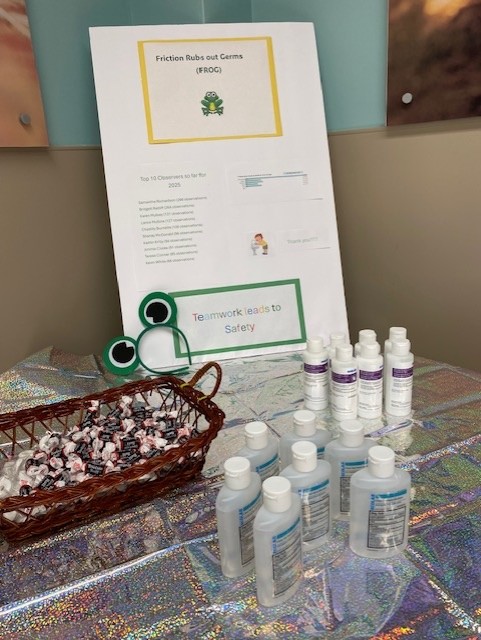
- Riverside 3 and ION: Employees stopped by informational tables to learn more, and Paddy made an appearance at ION!
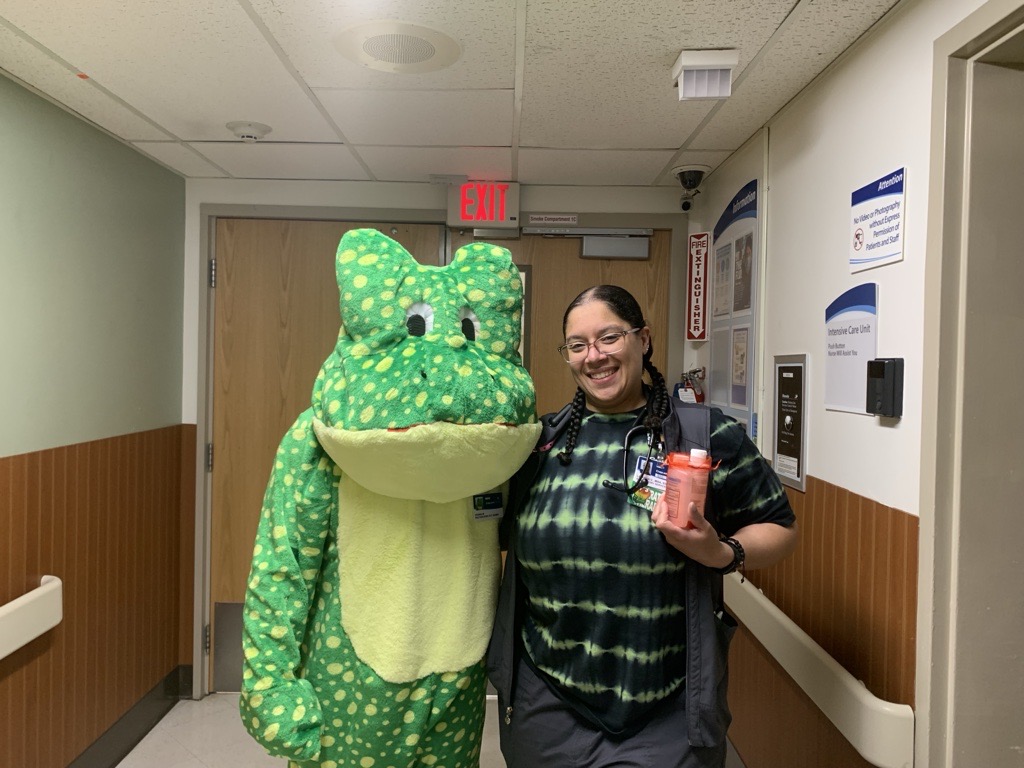
- CFMH: Franklin the FROG was up to his old tricks and walked the floors with his faithful guide, Angela Moore from Infection Prevention and Control, spreading the word about hand hygiene.
- CGCH: Christina Lafon hosted a special Sinko de Mayo celebration, featuring handprint cookies and smoked queso.
- CTCH: Karen Mulkey set up education stations, handed out goodies and acknowledged the top CTCH hand hygiene observers.
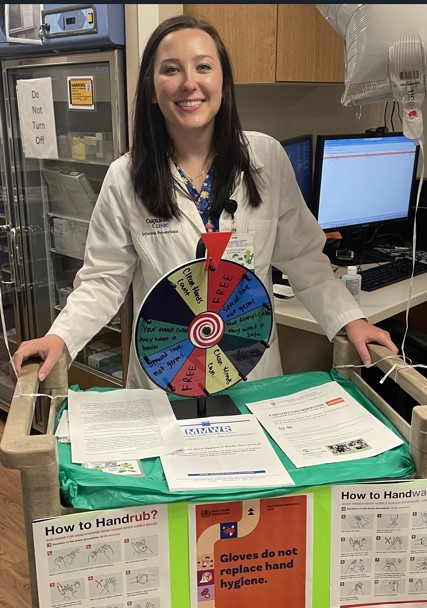
- CRBH: Summer Tomlin created a fun and educational Wheel of Fortune game.
Above are a few pictures from the events. This Wow Wall post has more.
FROG (Friction Rubs Out Germs)

Our FROGs Franklin and Paddy help us keep hand hygiene top of mind. FROG (Friction Rubs Out Germs) is a fun acronym that reminds us that proper hand hygiene involves rubbing hands together to create friction.
For proper hand hygiene, lather your hands by rubbing them together with soap. Make sure to lather the backs of your hands, between your fingers and under your nails. This creates friction that helps lift dirt, grease and microbes from the skin.
From Our Leaders: The Importance of Hand Hygiene
Hand hygiene is so important that our leaders want to share their thoughts.
Steve Arner, President and Chief Executive Officer
"Every day, we dedicate ourselves to our patients and uphold our mission, but one of the single most important ways any one of us can help our patients and enhance community health is to wash our hands.
Hand washing is crucial to preventing illness and spreading germs—and the most effective method to minimize infections.
That’s why clean hands are everyone’s responsibility to promote a safe environment for our patients, care teams and anyone who enters our campus."
Rawle “Tony” Seupaul, MD, Executive Vice President and Chief Physician Executive
"Patient safety is our highest priority. In an effort to provide the safest patient experience possible, our teams follow national best practices set for hand hygiene safety standards. Doing so ensures our healthcare system is viewed as one of the safest that prioritizes patient safety and care.
I encourage everyone to use the tools available to record hand hygiene observations so we can continue to showcase how we’re excelling in this area."
Tami Frost, RN, Chief Nursing Officer
"Proper hand hygiene is so important to keep our patients safe. We know that washing hands for at least 15 seconds removes germs and prevents illness, which is especially important to protect people with weakened immune systems.
Observing and reporting on our hand hygiene practices is as essential as implementing them. If we don’t document them, they didn’t happen, so be sure to use our reporting tools regularly to ensure we maintain our high standards for hand hygiene.
Whether you work in patient care or not, it’s up to all of us to reduce the spread of germs."
A Good Reminder
Hand hygiene is the best way to prevent and reduce healthcare-transmitted infections. It’s also the foundation for excellent patient care and a requirement among employees for reporting agencies. It’s a simple and effective infection prevention strategy that makes a big difference in keeping our patients safe and saving our hospitals’ resources.
The best practices we follow for hand hygiene also reflect the Leapfrog reporting agency’s standards:
- Monitoring
- Providing feedback
- Training and educating
- Building infrastructure and culture
- Focusing on best practices to ensure these standards are met
This visual from the World Health Organization is a good reminder of all the important times to follow proper hand hygiene. A copy to download is available at the bottom of this article.
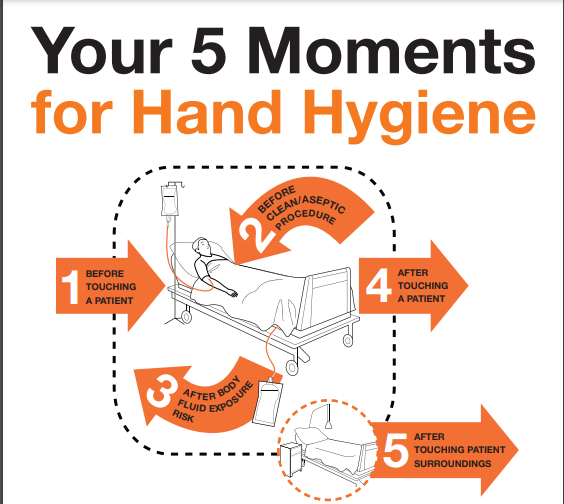
- Before touching a patient:
When? Clean your hands before touching a patient when approaching him/her.
Why? To protect the patient against harmful germs carried on your hands.
- Before clean/aseptic procedure:
When? Clean your hands immediately before performing a clean/aseptic procedure.
Why? To protect the patient against harmful germs, including the patient’s own, from entering his/her body.
- After body fluid exposure risk:
When? Clean your hands immediately after an exposure risk to body fluids (and after glove removal).
Why? To protect yourself and the health-care environment from harmful patient germs.
- After touching a patient:
When? Clean your hands after touching a patient and his/her immediate surroundings, when leaving the patient’s side.
Why? To protect yourself and the health-care environment from harmful patient germs.
- After touching patient surroundings:
When? Clean your hands after touching any object or furniture in the patient’s immediate surroundings when leaving – even if the patient has not been touched.
Why? To protect yourself and the health-care environment from harmful patient germs.
Questions?
If you have questions about hand hygiene or want to get involved in the hand hygiene committee, contact Angela Moore, Infection Prevention, at amslough@carilionclinic.org.
For questions about the ambulatory hand hygiene monitoring program, contact Bray Studtmann at bknemetzgardner@carilionclinic.org.


Hand hygiene is the best way to prevent and reduce healthcare-transmitted infections.
FROG (Friction Rubs Out Germs) reminds us that proper hand hygiene involves rubbing hands together to create friction.
FROGs Paddy and Franklin partnered with teams around the system to spread the word about hand hygiene.
Hear from our leaders on the importance of hand hygiene.
