What to Know About Advances in Stroke Care
An ischemic stroke occurs when blood flow to part of the brain is blocked, depriving brain tissue of oxygen and nutrients. Within minutes, brain cells begin to die—making stroke a true medical emergency. Stroke remains the fourth leading cause of death in the United States, affecting nearly 800,000 people each year.
Prevention and awareness are critical. Knowing risk factors and recognizing symptoms early can save lives.
Faster Care from Field to Treatment
The 2026 American Stroke Association guidelines emphasize that outcomes depend heavily on how quickly patients receive treatment. One key advancement is the focus on direct EMS transport to thrombectomy-capable stroke centers, such as ours at CRMH. A thrombectomy-capable stroke center is a hospital equipped to remove a stroke-causing clot quickly, on-site, using specialized tools and teams. This approach helps to improve recovery outcomes.
While clot-busting medication has traditionally been limited to a 4.5-hour window, new guidance highlights that select patients may benefit from treatment up to 24 hours after symptom onset. Advanced imaging allows care teams to identify brain tissue that can still be saved.
Even with this extended window, early recognition and immediate activation of emergency services remain essential for the best possible outcomes.
“Advances in stroke care are allowing us to treat more patients than ever before—but the most important factor is still how quickly patients get to us,” said Biraj Patel, MD, co-medical director of our thrombectomy-capable stroke center. “Recognizing the signs of stroke and calling 9-1-1 immediately gives our teams the best chance to save brain function and improve lives.”
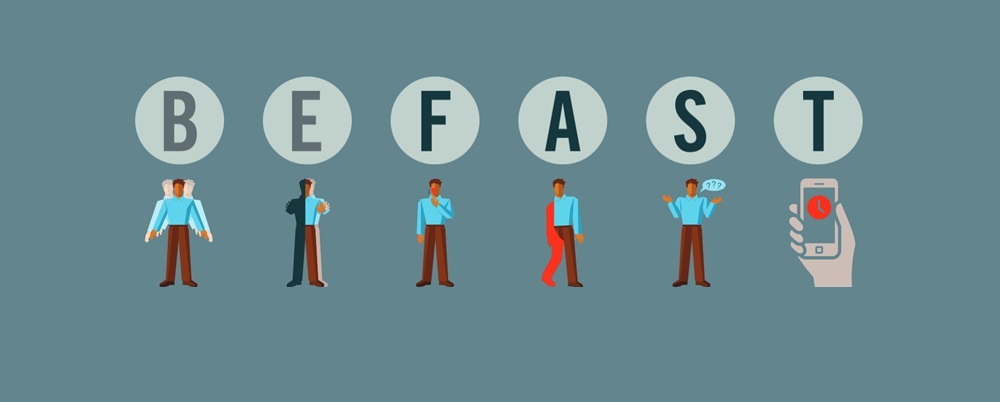
Stroke signs in adults include:
- Unsteady balance
- Changes in eyesight
- Drooping face
- Weakness or numbness in arms
- Difficulty in speech
If you or someone else has any of these symptoms, call 911 right away.
Stroke in Children
Stroke is often thought of as an adult condition, but it can also affect infants, children and teens. Early recognition is critical. Warning signs may include:
- Sudden severe headache, especially with vomiting or sleepiness
- New seizures, particularly on one side of the body
- Sudden confusion or difficulty speaking or understanding
- Vision problems in one or both eyes
- Trouble walking, dizziness, or loss of coordination
“At Carilion, we want our teams and communities to know that stroke can happen at any age," said Thomas Kodankandath, MD, co-medical director of our thrombectomy-capable stroke center. "Early recognition and immediate response are essential to giving pediatric patients the best possible outcomes.”
Learn more at CarilionClinic.org/be-fast.

The American Stroke Association updated their ischemic stroke guidelines this year.
The new guidelines support advanced imaging to extend treatment for some patients up to 24 hours.
Directing EMS transport to our thrombectomy-capable stroke center at CRMH can help to significantly reduce time to lifesaving treatment.
Knowing risk factors and recognizing symptoms early can save lives.
