Vaccine Equity: What Does It Mean and Why Is It Important?
We have given more than 90,000 COVID-19 vaccine shots in our communities to date.
At our first vaccination clinic in January, more than 4,500 people went through the Berglund Center to get vaccinated. It became clear that the people being vaccinated didn’t reflect the makeup of our community.
Despite our efforts to make the vaccine registration easily available to everyone who was eligible, it was clearly not getting to every person who needed to register. African American and Latino groups—who are at higher risk of becoming infected with COVID-19 or being hospitalized from the virus—were under-represented.
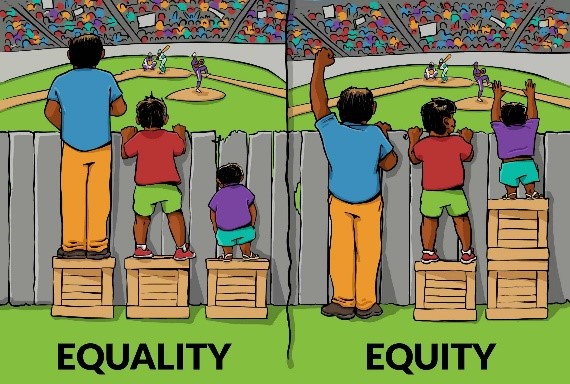
Our leaders started thinking about ways we could make sure that our harder-to-reach communities had everything they needed to be a part of the vaccination clinics. This is called vaccine equity—the ability for every eligible person to access the vaccine (see sidebar to the right).
“We recognized that something needed to be done to make it possible for everyone to have a better opportunity to participate,” said Dr. Nathaniel L. (NL) Bishop, our Chief Diversity, Equity and Inclusion Officer.
“It really got us thinking about how we communicate to the community, what barriers these groups face and how we address it—what can we do to make these clinics more equitable?” said Shirley Holland, vice president, Planning and Community Development.
Shirley, NL, the Virginia Department of Health (VDH) and community partners began working closely together and recognized that the best way to overcome barriers to vaccine access—like having little or no transportation, no computer or limited knowledge of how to use computers, and sometimes no phone access—was figuring out how to directly contact individuals to get them scheduled for the vaccine.
An important step in the work toward getting all eligible people to the clinics (vaccine equity) was to identify “community connectors.” These individuals have established influence in their community, and can help us pinpoint people who are eligible for the vaccine but haven’t been able to make an appointment.
Through our established relationships in the community, about a dozen community connectors were identified. These are people with various occupations—including pastors and civil service employees—who are plugged into their communities. The community connectors compile a weekly list of people who they know are ready to be vaccinated, but who may need help getting scheduled.
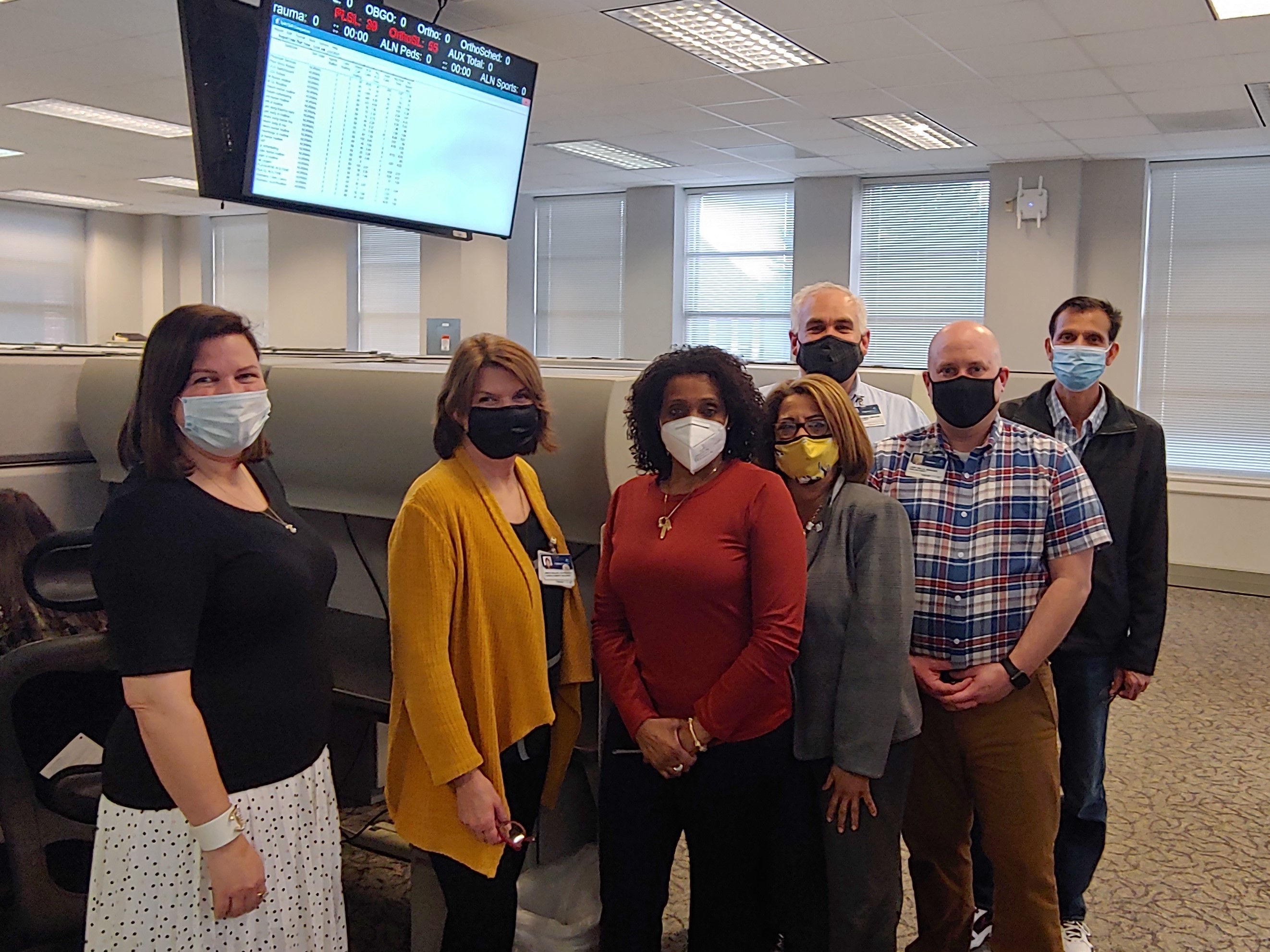
Carilion Direct, our patient-facing call center, splits the lists with community connectors and other volunteers they have enlisted. Together they make calls each Monday, scheduling community members through the VDH system for our Wednesday vaccine clinics.
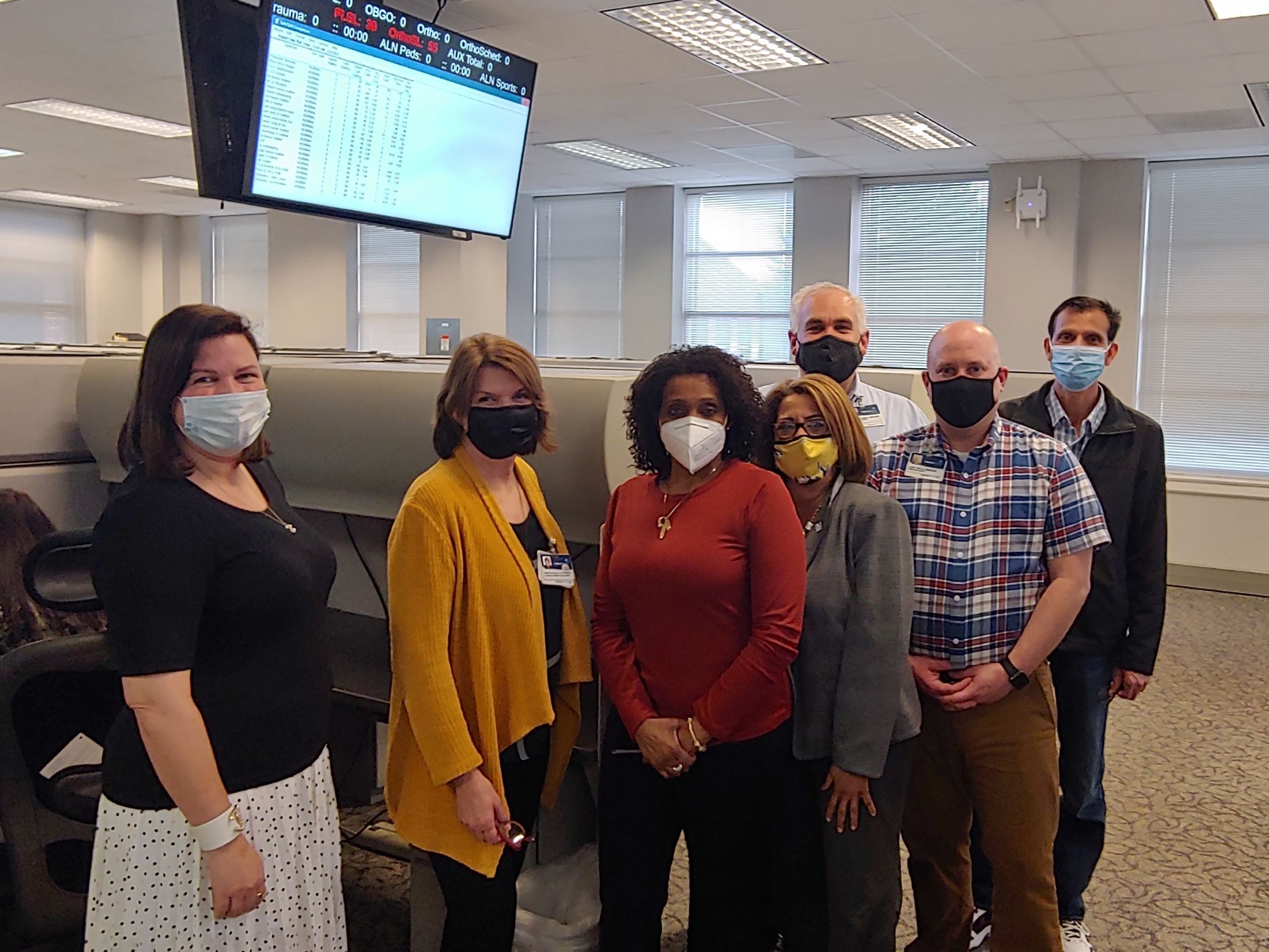
L-R: Lisa Saavedra-Rogan, community volunteer; Shirley Holland; Trish White-Boyd, Roanoke City vice mayor; Vivian Y. Sanchez-Jones, Roanoke City council member; Larry Wells, contact direct manager, Carilion Direct; Paul Muddiman, Contact Center director, Carilion Direct; Leela NeoPaney, community volunteer at Carilion Direct to make Monday night scheduling calls.
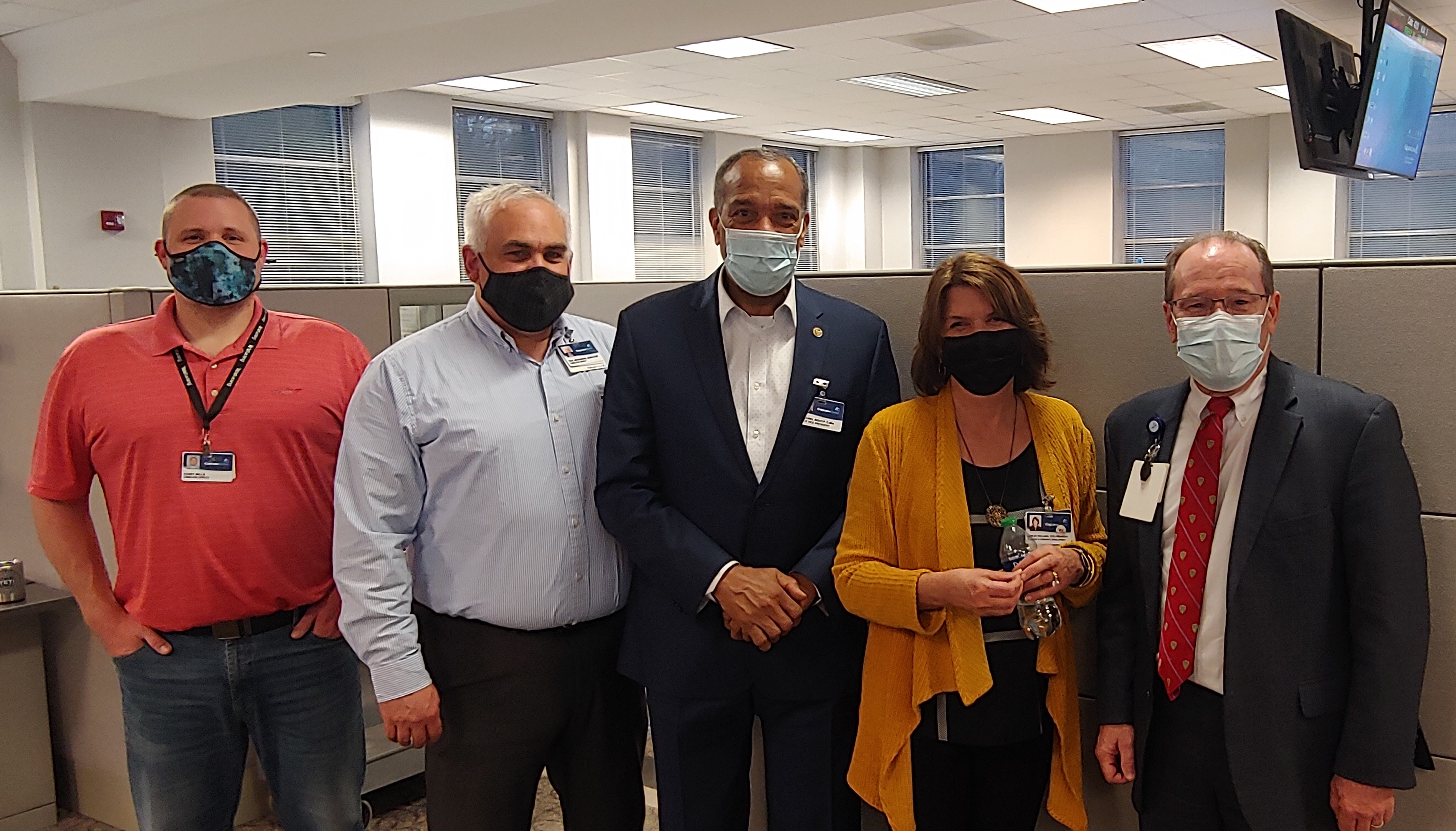
L to R: Casey Mills, business unit system analyst, Carilion Direct; Paul Muddiman, contact center cirector, Carilion Direct; NL Bishop, Chief Diversity, Equity and Inclusion Officer; Shirley Holland, vice president, Community Planning and Development; Dr. Fidel Valea, senior vice president and chair of Obstetrics and Gynecology, Carilion Clinic and Virginia Tech Carilion School of Medicine at Carilion Direct to make Monday night scheduling calls.
Shirley and NL also volunteer to help make calls. “Everyone I have talked to is so appreciative of the call and being able to establish an appointment,” NL said. “It is an amazing experience to overhear so many other volunteers in the room also making calls and is especially gratifying to hear Latinx friends who make calls speak to community members in their native language. It is such a wonderful sense of community!”
Between Carilion Direct—who helps make calls and is instrumental to this effort—community connectors and other volunteers, about 350-400 calls are made each Monday night, within a two-hour time period, to schedule vaccine appointments for eligible people.
Many local church leaders have also been eager to open their churches to hold small vaccine clinics and help get the word out to people in their community. One of the first efforts, not long after our first vaccine clinic, was a clinic at High Street Baptist Church in northwest Roanoke, where 100 shots were given to nearby friends and neighbors who were personally invited by neighborhood leaders. Since then, more small clinics have popped up using the same approach.
“We’re not where we want to be, but we recognize that, and we are committed to making a difference—and we are making great progress,” said NL.
“We will continue to collect lists, make calls and work with our community partners to move closer to having vaccination clinics that look more like the community,” said Shirley.
The new Office of Diversity, Equity and Inclusion was created to further develop our focus on health equity and social justice by expanding our work to advance community and public health.
What Is Equity?
Our vaccine clinics are offered to everyone who is eligible—that is equality. But equity is something different.
Equity involves the ability of certain people and groups of people to access the clinics.
This often-used image shows the difference. In it, everyone has the same box to stand on (equality), but not all of them are able to use that box in a way that meets the goal of seeing the ballgame (equity).