Carilion History: Nursing Education
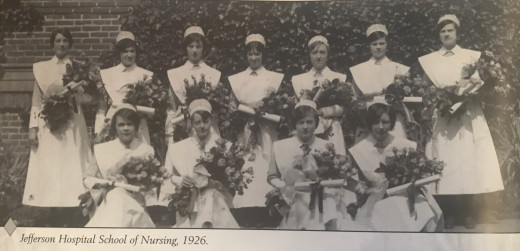
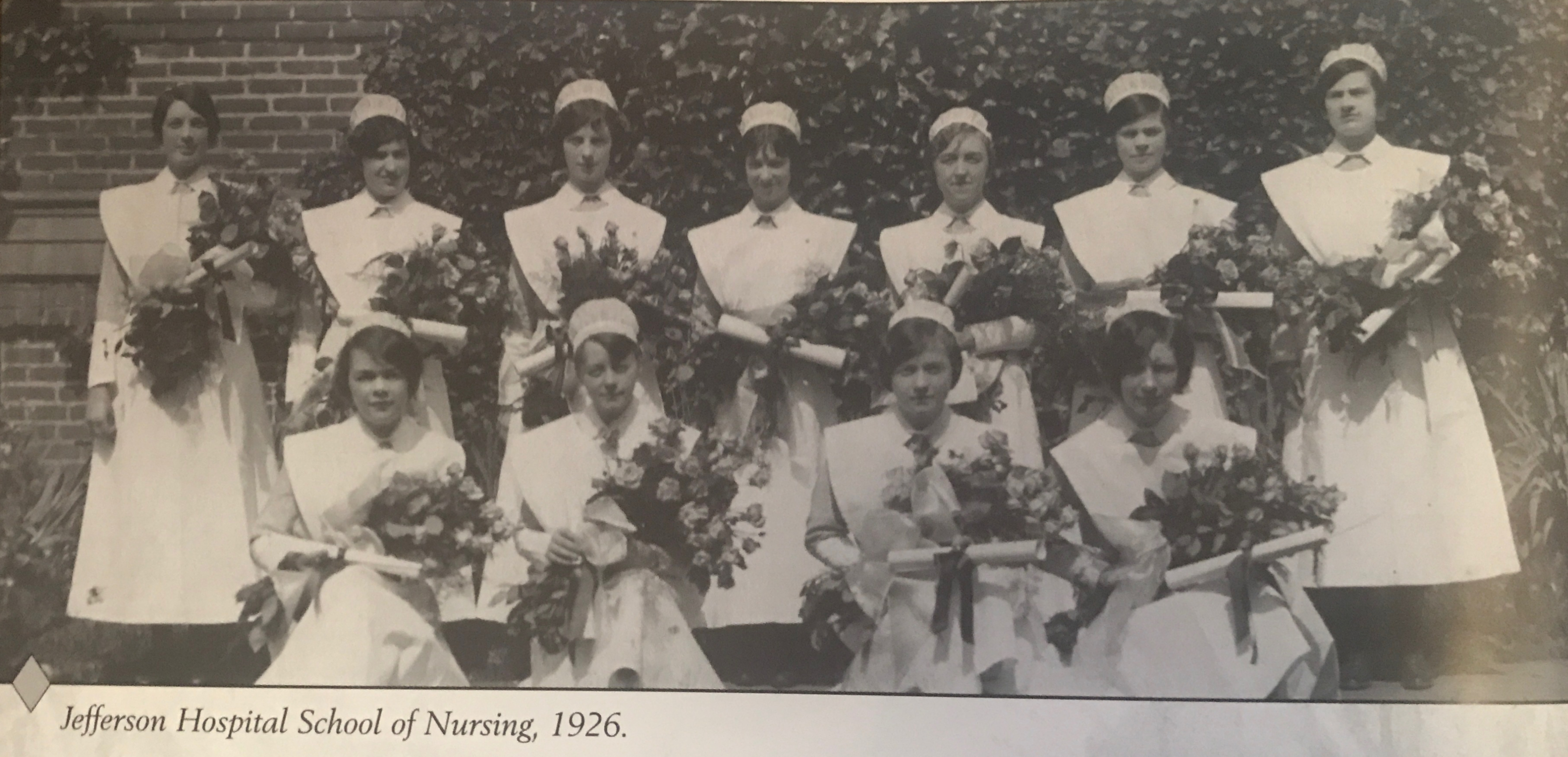
Love, hope, persistence, endurance, patience, purity, charity, loyalty—each represented by one of the eight folds in the caps belonging to nurses graduating from the Roanoke Hospital School of Nursing.
A long and proud history of the first training school for professional nurses in southwest Virginia began with the founding of Roanoke Hospital itself.
The Beginning
Just one month after the hospital opened in 1900, trustees approved a series of rules and regulations for the governing of a training school. By November 1900, three students were enrolled under the supervision of the head nurse/superintendent, earning a $5 a month stipend to pay for texts and uniforms.
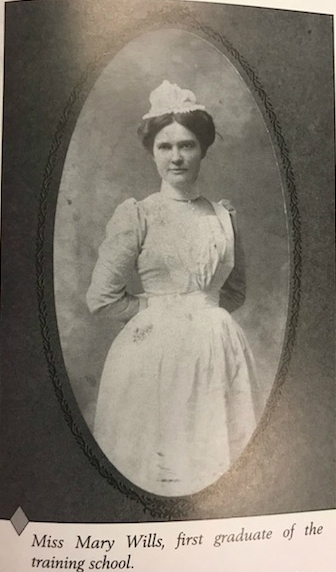
At that time, it took two years to complete courses. By 1905, the program was extended to three years, which remained the term until 1988.
State registration for nurses began in 1903. Although not all of Roanoke Hospital’s graduates stayed at the hospital, they all enjoyed a reputation of being well-qualified for their position.
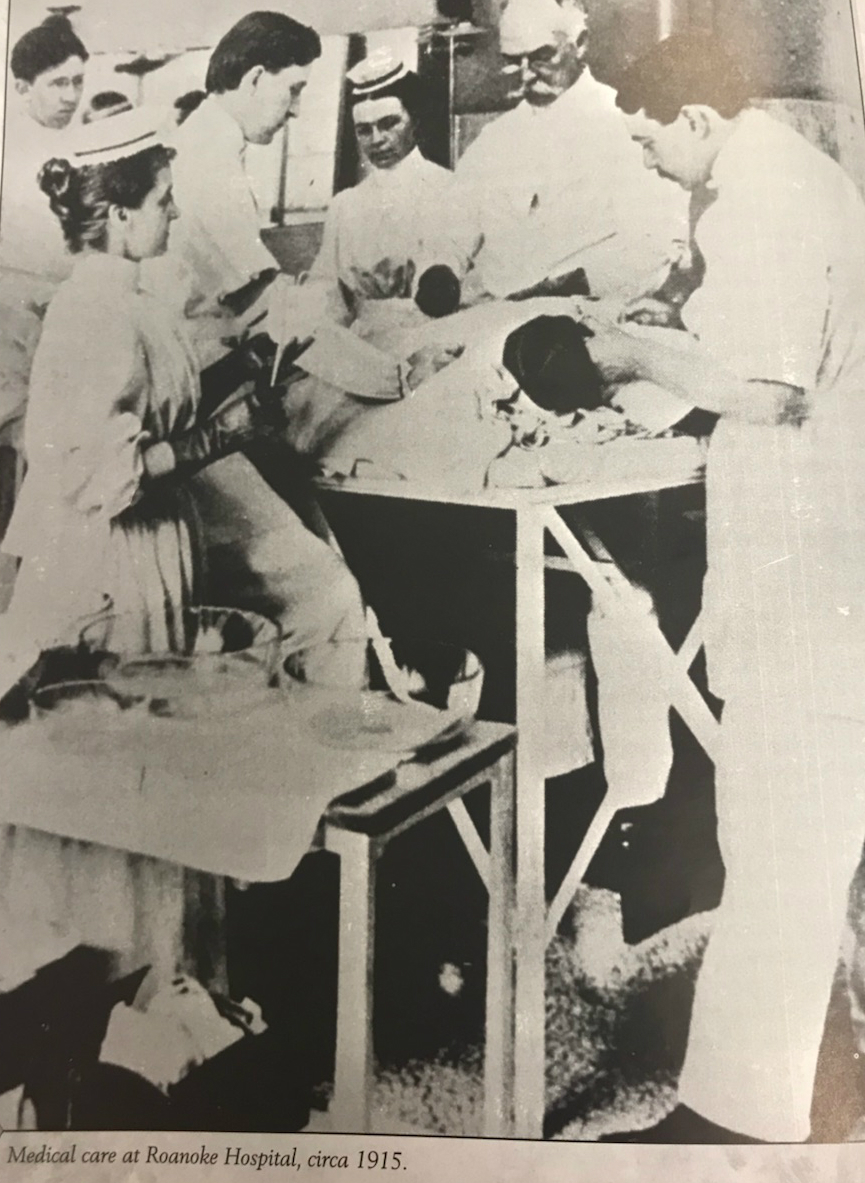
From the earliest years, the hospital’s challenge was attracting enrollees into its course of study. Besides the requirement to be unmarried, nurses were expected to put in long hours under strict supervision in often miserable conditions.
Nurses in the earliest years of the institution were housed on the top floor of the hospital—crowded, unheated and close to unbearable in the summer.
When on duty for 12-hour shifts, first-year students were expected to join the nursing staff in housekeeping and chore work, including being in charge of the hen house, which provided a fresh food supply for the hospital kitchen. Until the mid 1950s, nurses remained in charge of the penned lab animals housed on the hospital roof.
For many years, student nurses were trained only by the head nurse; finding physicians willing and available to provide lectures was a constant problem.
The War Years
With World War I raging in Europe in 1918, nurses were in extremely short supply for recuperating soldiers. Board members began trying to recruit “suitable” nursing students from orphanages in Salem and Lynchburg as well as from local high schools.
Each time the hospital increased the number of beds, the workload for nurses became greater. Overcrowding was a problem in staff quarters, so funds were raised to construct the “Staff House.”
In 1920, student nurses’ compensation was upped to $20 a month in an attempt to increase the number of students in the training program. The first half was in cash for books, uniforms and shoes, the other half was held on account; any money remaining at the end of the student’s training was returned upon graduation.
When a free clinic was opened in 1924 to treat the city’s residents who were not sick enough for hospital admission, student nurses staffed it. The same year, a full-time instructor was hired and an alumni association was organized.
When a new unit was built at the hospital in 1925, some nurses also lived there, on the third floor.
The superintendent made another plea for more nurse trainees. In her opinion, the training efficient nurses rendered an important service to the community. Plus, special-duty nurses brought in additional revenue. “No hospital in Virginia is better equipped for work,” she said. “The board can have every reason to expect the school to develop as fast as living quarters will allow.”
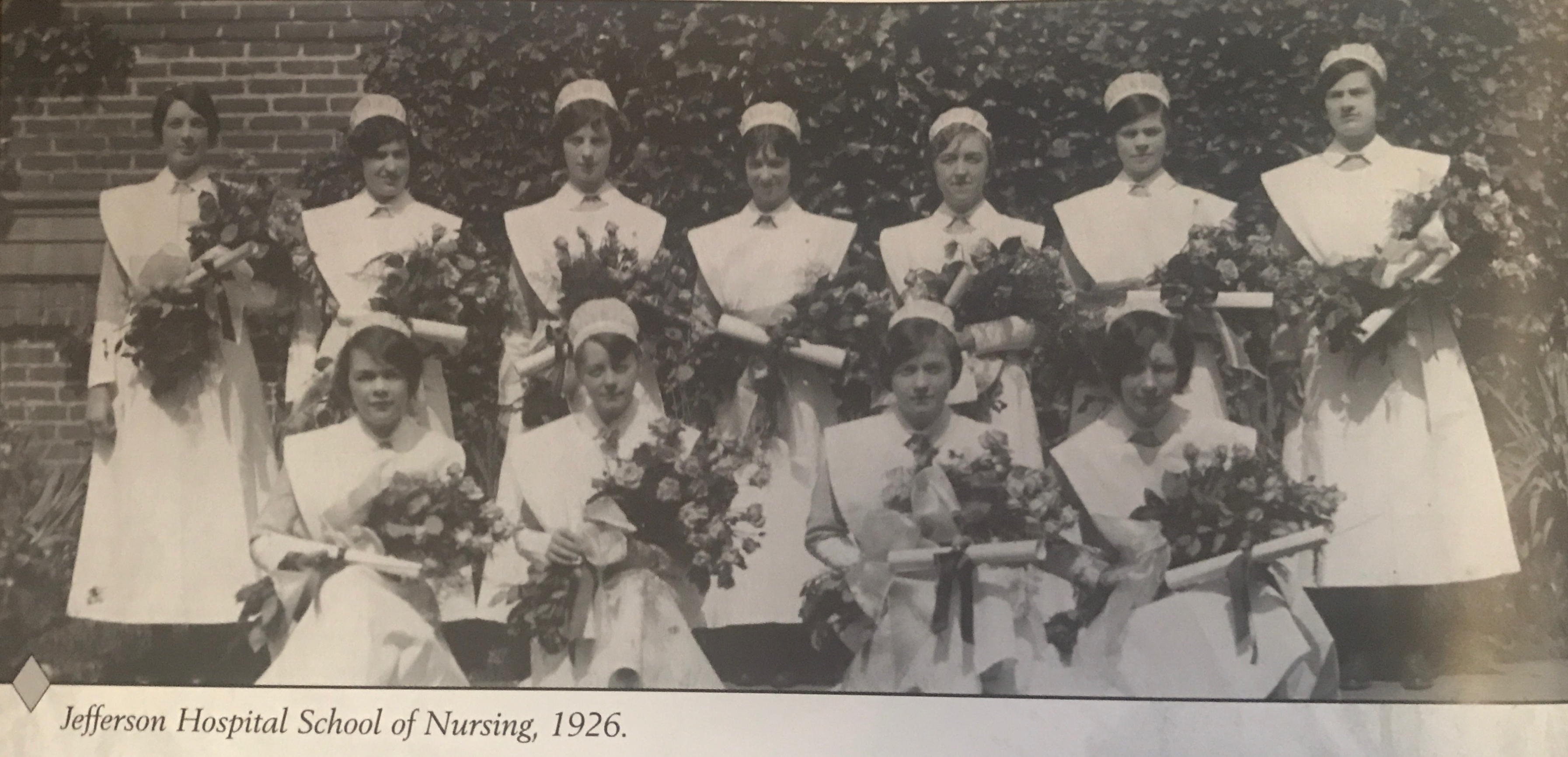
A new nurses’ home was opened in June 1927, providing not only residence space but also lab and lecture facilities for instruction. The School of Nursing was now able to require that applicants have four years of high school prior to enrolling.
During the Great Depression, student nurse allowances were reduced from $20 to $12 per month and graduation exercises were suspended. It was a financially difficult time and there was talk that the nurses training school would have to be closed.
During World War II, the hospital agreed to participate in the Cadet Nurse Corps, a program in which federal funds paid for students to be trained as nurses through the hospital’s School of Nursing. In 1944, the Army called for women to serve as medical technicians in the war to assist in treating returning battle casualties.
The School Grows
September 1948 welcomed the largest preclinical class of student nurses in the history of the hospital. There were 31 students selected from more than 60 applicants, but housing continued to be a problem.
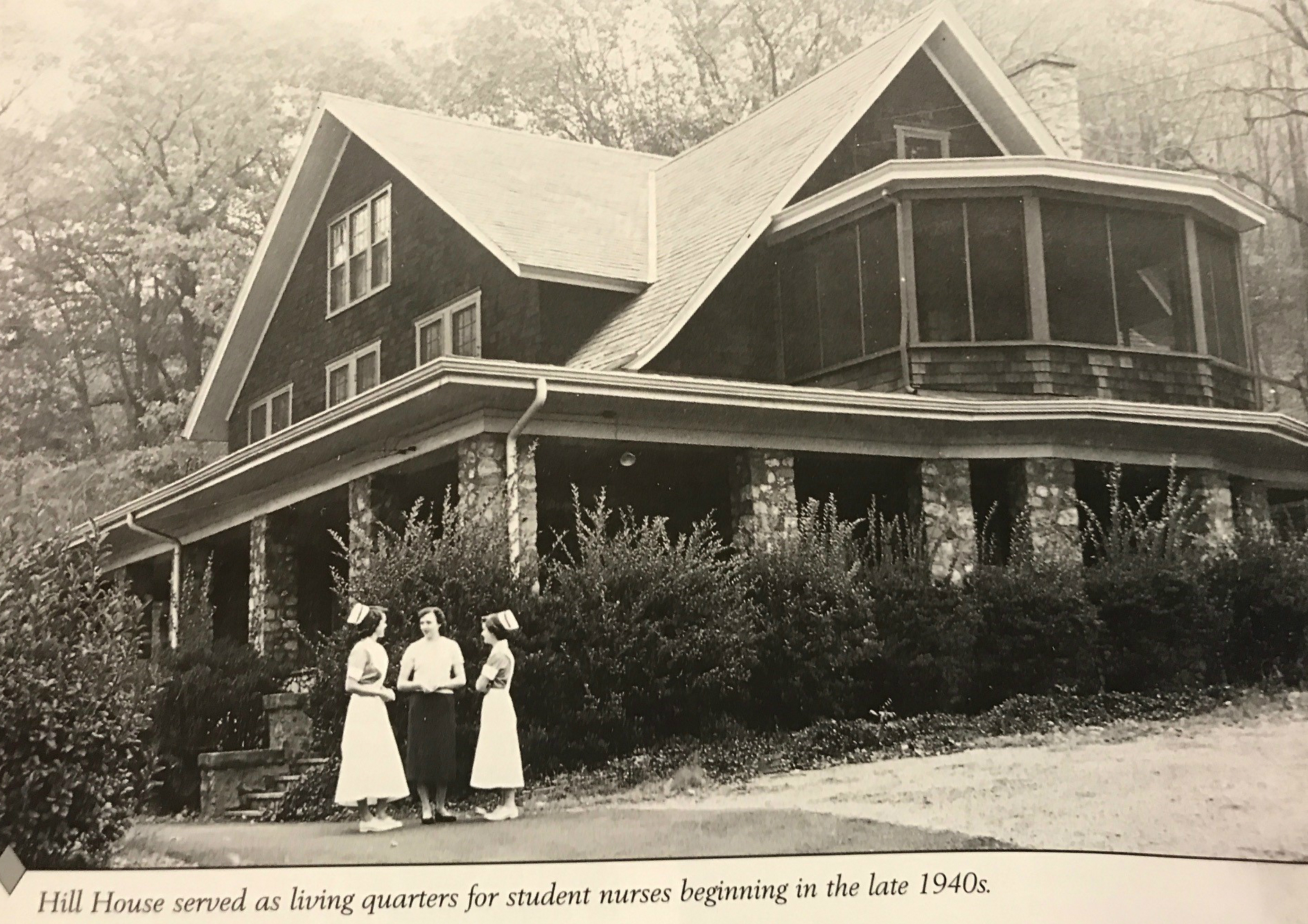
Luckily, in December 1947, a property adjoining the hospital on Belleview Avenue became available and the hospital purchased it and renovated it for student nurses. It is remembered as “Hill House.”
Starting in 1952, the school as accredited by the National League of Nursing Education.
Housemothers supervised the students and there were strict rules for student nurses regarding conduct both on and off hospital grounds—for example, if they walked downtown, they had to wear hats, gloves and coats.
No visitors were allowed in dormitory quarters, and students were asked to drop out of school to be married.
But students were often treated to picnics and outings, and hospital board members and medical staff remembered nurses with thoughtful gifts.
By 1955, students were required to take a total or 955 hours of classroom instruction, plus 95 hours of ward teaching.
With the national trend in education leaning toward four-year degrees, the School of Nursing was phased out and closed in 1988, when it graduated 12 nurses. In its place an alliance was struck with Radford University to provide nursing students with experience and education in a real hospital setting through the Radford University Waldron School of Nursing. Over the course of the School’s 88 years, nearly 1,500 nurses received diplomas.
School of Practical Nursing Meets Community Needs
A School of Practical Nursing began in 1957. It was an opportunity to help satisfy the hospital's need for nurses and helped boost the local economy. One of the area's largest employers, Roanoke's American Viscose Plant, announced it was closing in the mid-1950s. In a joint effort with the Roanoke City School Board, the hospital started the program, hoping to help the city with its suddenly unemployed population and supplement its own skilled labor pool.
The yearlong course, with classes enrolled twice a year, was the first program of its kind in the Roanoke area and prepared students to assist doctors and registered nurses. When the school started, no tuition was required if students agreed to join the hospital’s nursing staff for six months following their training.
The School of Practical Nursing would eventually merge with Jefferson College of Health Sciences.
The Beginnings of Jefferson College of Health Sciences
In 1965, with the construction of Community Hospital of Roanoke Valley, two nursing programs were consolidated and the Community Hospital of Roanoke Valley School of Nursing was created; the first 26 graduating nurses were awarded their diplomas in 1968.
In 1981, the Community Hospital Board of Trustees agreed to turn the school into a hospital-based college that could grant two-year degrees in nursing and allied health.
A year later, the Community Hospital of Roanoke Valley College of Health Sciences was established. It was the first hospital-based college in Virginia and one of only seven accredited hospital-based colleges in the country.
What had been solely a School of Nursing now offered two-year degrees in nursing and respiratory therapy, which form the basis of the modern Jefferson College of Health Sciences. By 1988, the college had 200 students and three programs.
In 2017, the 35th anniversary of the college, it educates a range of health care professionals at the associate, bachelor’s, master’s and doctoral levels, and its 1,200 students in 23 programs represent 35 states and territories.