Llamas are Working in the Solar Field at CNRV
In 2017, we installed a 4,000-panel solar array at CNRV to help generate electricity. The property is actively maintained by a local sheep farmer and his herd, which helps increase the economic output of the land while eliminating the use of gasoline and fossil fuels to mow the area. This makes the sustainability effort even “greener” by reducing the use of fossil fuels in landscaping equipment.
And now, there are 2 new members of the CNRV sustainability team: Quinn and June-bug! The llamas arrived in late June and will remain with the sheep through the end of October or early November. In addition to helping graze the field, they provide security and protection for the sheep against predators, primarily foxes. Several caretakers regularly provide water and monitor the animals' health throughout the grazing season.
How Solar Energy Works
Solar panels capture energy from the sun and turn it into electricity. The electricity is converted into the type of power used in our buildings. It can then be used on-site or sent to the electrical grid to help power homes, businesses, and other facilities. The solar power generated at CNRV is used on-site. CNRV was the first hospital in the state to utilize a single-axis solar tracking system. The system allows panels to tilt from east to west throughout the day, following the journey of the sun to maximize efficiency.
CNRV’s Solar Field Performance
From August 2025 through July 2026, the solar array at CNRV generated approximately 1.7 million kWh of electricity, supplying 12.9% of the hospital’s total electrical consumption. The electricity that was produced avoided approximately 1,102 metric tons of carbon dioxide equivalent (CO₂e) emissions during the study period. This is the equivalent of 257 gasoline-powered vehicles driven for one year or 148 homes’ energy use for one year.
For More Information
To learn more about sustainability at Carilion, contact Marina Sotelo at mcsotelo@carilionclinic.org.
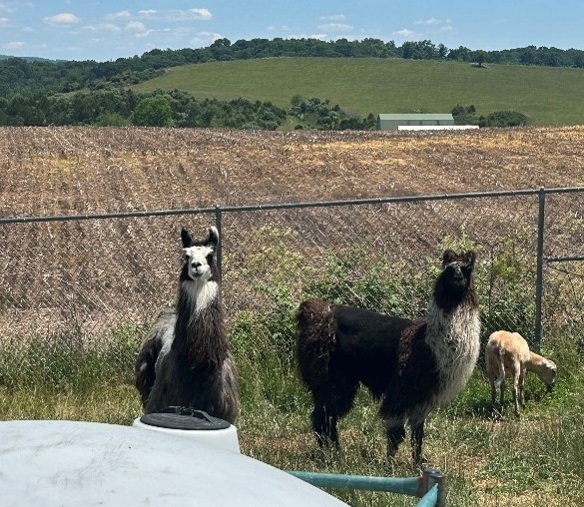
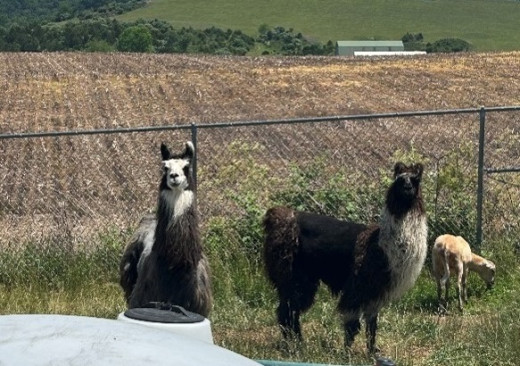
Over the past few months, two llamas have been working in the solar field at CNRV to help graze the field and protect sheep from predators.
Their names are Quinn and June-bug. They will be on-site through the end of October or early November.
From August 2025 through July 2026, CNRV’s solar array generated approximately 1.7 million kWh of electricity, supplying 12.9% of the hospital’s electrical needs.
