FROG-Approved Hand Hygiene Fun
At Carilion, we focus on hand hygiene 365 days a year, and World Hand Hygiene Day serves as an important reminder of the critical role proper hand hygiene plays in patient safety.
Hand hygiene is the foundation of excellent patient care and a requirement for employees under reporting agency standards. It is a simple yet highly effective infection prevention strategy that helps keep our patients safe while conserving valuable hospital resources.
Be on the lookout for our FROG friends, Paddy (CRMH) and Franklin (CFMH) participating in activities to raise awareness and celebrate hand hygiene in honor of World Hand Hygiene Day, May 5. They could come to your unit!
FROG (Friction Rubs Out Germs)

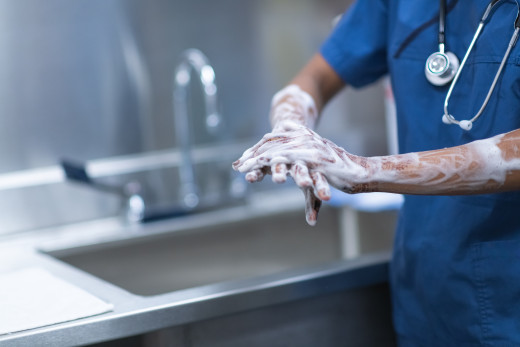
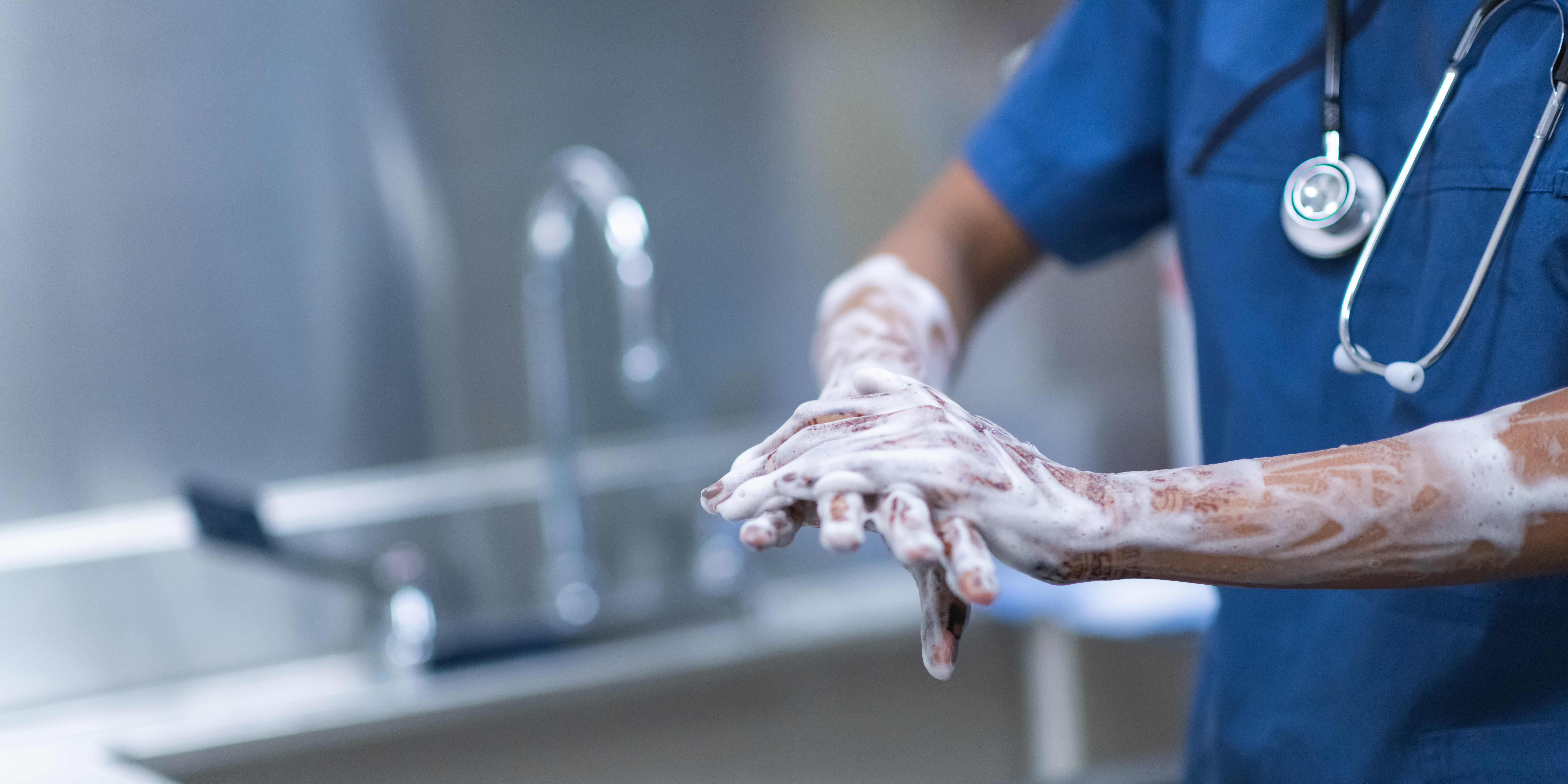
Our FROGs Franklin and Paddy help us keep hand hygiene top of mind. FROG (Friction Rubs Out Germs) is a fun acronym that reminds us that proper hand hygiene involves rubbing hands together to create friction.
For proper hand hygiene, lather your hands by rubbing them together with soap. Make sure to lather the backs of your hands, between your fingers and under your nails. This creates friction that helps lift dirt, grease, and microbes from the skin.
From Our Leaders: The Importance of Hand Hygiene
Hear from our leaders why hand hygiene is important:
Steve Arner, President and Chief Executive Officer
“Our work begins with a commitment to our patients and our mission. Among the many ways we support patient safety and community health, consistent hand hygiene remains one of the most impactful.
Hand washing plays a vital role in preventing illness and limiting the spread of germs—it is one of the simplest and most effective ways to reduce infections.
That’s why clean hands are everyone’s responsibility to promote a safe environment for our patients, care teams, and anyone who enters a Carilion facility."
Rawle “Tony” Seupaul, MD, Executive Vice President and Chief Physician Executive
“Patient safety remains our top priority. To deliver the best and safest possible experience for our patients, our teams follow nationally recognized best practices for hand hygiene. These efforts help ensure our healthcare system continues to be recognized as a leader in safety, quality, and compassionate care.
I encourage everyone to take advantage of the tools available to record hand hygiene observations so we can continue to showcase our strong performance and ongoing commitment to excellence.”
Michelle Franklin, RN, Chief Nursing Officer
“Proper hand hygiene plays a critical role in keeping our patients safe. Washing hands for at least 20 seconds helps remove germs and prevent illness, which is especially important for protecting individuals with weakened immune systems.
Monitoring and reporting our hand hygiene practices is just as important as implementing them. If it isn't documented, it may not have happened, so be sure to use our reporting tools regularly to ensure we maintain our high standards for hand hygiene. Whether you work directly with our parents or not, it’s up to all of us to help limit the spread of germs.”
Kristie Williams, RN, Vice President, CGCH, CTCH
“Hand hygiene is one of the most effective ways we can protect both our patients and our team members. By making it a daily priority, we reinforce our dedication to safety and help create a healthier environment for everyone who walks through our doors.”
Greg Madsen, Vice President, CRBH
“I am deeply committed to hand hygiene as a fundamental practice in keeping our patients, staff, and community safe. Proper hand hygiene is one of the most effective ways we have to prevent the spread of infections, and I actively support and encourage its consistent practice throughout our organization. Protecting those we serve begins with these simple, yet critical, actions.”
Carl Cline, RN, Vice President, CFMH
"Hand hygiene is one of the most critical practices in a hospital because it is the simplest and most effective way to prevent the spread of infections. Proper hand cleaning reduces the transmission of bacteria and viruses between patients, staff, and visitors, helping to prevent healthcare‑associated infections that can lead to serious complications, longer hospital stays, and increased costs. By consistently performing hand hygiene at key moments—before and after patient contact, before procedures, and after exposure to bodily fluids—healthcare workers protect not only their patients, but also themselves and their colleagues, reinforcing a culture of safety and high-quality care throughout the hospital.
At CFMH, we take hand hygiene very seriously, same as everyone. We take a lot of pride in the contributions we make towards patient and staff safety. Hand hygiene is SAFETY."
Bill Flattery, Vice President, CNRV
“It’s incredible to think that one of the most powerful tools we have in healthcare is very low-tech. It’s our clean hands! Clean hands don’t just prevent infections; they protect trust, safety and every patient story that depends on us getting the basics right.”
5 Moments for Hand Hygiene
This visual from the World Health Organization is a good reminder of all the important times to follow proper hand hygiene. A copy to download is available at the bottom of this article.
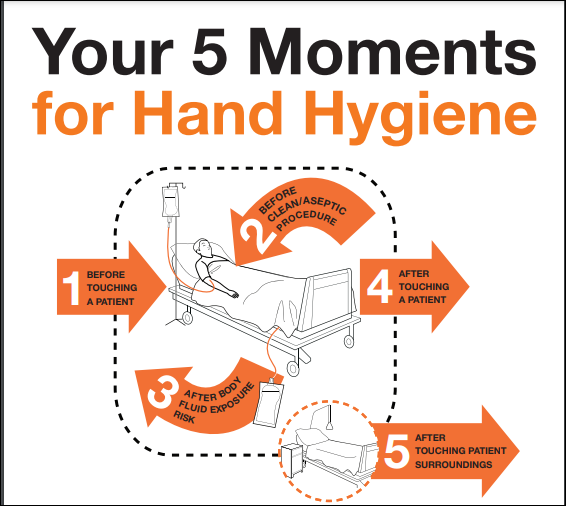
- Before touching a patient:
When? Clean your hands before touching a patient when approaching him/her.
Why? To protect the patient against harmful germs carried on your hands.
- Before clean/aseptic procedure:
When? Clean your hands immediately before performing a clean/aseptic procedure.
Why? To protect the patient against harmful germs, including the patient’s own, from entering his/her body.
- After body fluid exposure risk:
When? Clean your hands immediately after an exposure risk to body fluids (and after glove removal).
Why? To protect yourself and the health-care environment from harmful patient germs.
- After touching a patient:
When? Clean your hands after touching a patient and his/her immediate surroundings, when leaving the patient’s side.
Why? To protect yourself and the health-care environment from harmful patient germs.
- After touching patient surroundings:
When? Clean your hands after touching any object or furniture in the patient’s immediate surroundings when leaving – even if the patient has not been touched.
Why? To protect yourself and the health-care environment from harmful patient germs.
The best practices we follow for hand hygiene also reflect the Leapfrog reporting agency’s standards:
- Monitoring
- Providing feedback
- Training and educating
- Building infrastructure and culture
- Focusing on best practices to ensure these standards are met
Questions?
If you have questions about hand hygiene or want to get involved in the hand hygiene committee, contact Angela Moore, Infection Prevention, at amslough@carilionclinic.org.
For questions about the ambulatory hand hygiene monitoring program, contact Bray Studtmann at bknemetzgardner@carilionclinic.org.
Hand hygiene is the best way to prevent and reduce healthcare-transmitted infections.
FROG (Friction Rubs Out Germs) reminds us that proper hand hygiene involves rubbing hands together to create friction.
Hear from our leaders on the importance of hand hygiene.
