Be Vigilant and Aware of Holiday Phishing
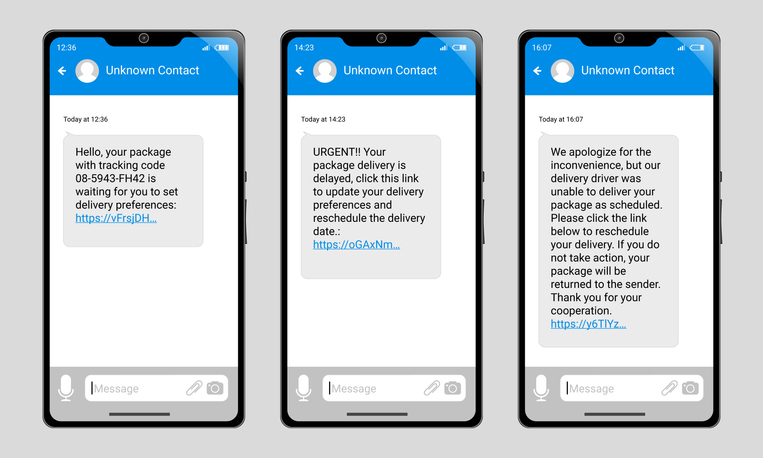
It's the time of year when many people are buying gifts online--which makes it a popular time for scammers to try to trick you into giving them money or your information.
This year, SMS phishing—sometimes called smishing—is a common tactic. That's when scammers target you through text messaging. A few examples are:
- Fake package delivery alerts
- Requests from someone impersonating your bank to verify your account details after telling you there is fraudulent activity in your account
- Texts from people impersonating your family or friends saying they need money for an emergency
- Too-good-to-be-true retail offers
- Fake charities asking for donations
- E-Z Pass scams claiming you owe money for tolls
How To Spot Phishing
Here are some tips from the FBI and our Information Security team to stay safe when you are shopping online:
- Don't send sensitive information through text messages.
- Be skeptical of messages from unknown numbers, and don't click links or download attachments within them.
- Track packages directly instead of clicking on links in text messages.
- Verify requests. Don't use the contact information in an unsolicited text. Look up the company’s phone number on your own and call the company.
- Don't use your work computer for online shopping. That way, if you do accidentally click a malicious link, our patients' information will not be compromised.
What To Do If You Receive a Suspicious Message
Text message:
- If you receive a suspicious text message, forward it to 7726 (SPAM) to report it to the phone carrier. This works with most phone carriers.
Email:
- Report suspicious emails you receive at work using the Report Phish button in your email menu bar.
- If you receive a suspicious email in a personal inbox, use available features within your application to report the message as spam or malicious, or simply delete the email without engaging.
Questions?
If you have questions, email our Information Security team at Office_of_Information_Security@carilionclinic.org.

Scammers sometimes set up fake websites or send emails or texts that look like they are from legitimate businesses.
Text messaging scams are especially popular this year.
Be cautious when shopping online, and don't click on links that seem suspicious—even if they look like they could be from a real company.
The Federal Trade Commission has more details about common scams.
