Addressing Black Maternal Care and Patient Outcomes: An Op-Ed from Dr. Jaclyn Nunziato
I was pleased to share this op-ed from one of our physicians, Obstetrician and Gynecologist Dr. Jaclyn Nunziato, with The Roanoke Tribune. It will run this week, and we felt it important to share with our Carilion teams as well.
- NL Bishop, D.Min., Chief Diversity, Equity and Inclusion Officer, Carilion Clinic
I vividly remember the moment during medical school when I first encountered the infamous painting depicting a young Black woman seated on a table, her hand over her heart, while a white man from the 19th century—known as the "father of gynecology"—looked upon her with disdain. I later learned that Obstetrics and Gynecology, which I hold dear, was established by exploiting and mistreating women, particularly Black women, in the pursuit of medical advances.
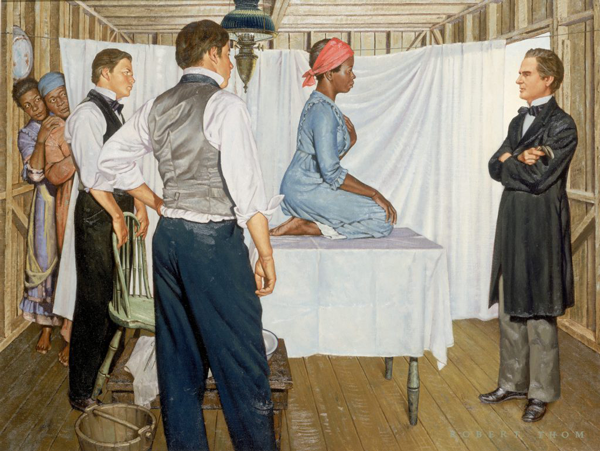
"J. Marion Sims: Gynecology Surgeon," from the series "The History of Medicine"
Early in medical school, I recognized that my chosen specialty has a complex history. However, I didn't fully grasp the far-reaching impacts of this legacy and its pivotal role in Black maternal mortality. As we celebrate Juneteenth, we must also confront the persistent injustices that continue to plague Black women in healthcare in our country. We must recognize the profession’s history and hold ourselves accountable for its consequences in today’s caregiving.
Black women in the United States are three to four times more likely to die from pregnancy-related complications than white women. This alarming statistic is not just a number. It represents mothers, daughters, sisters and friends lost to their families and communities. These deaths are largely preventable, stemming from systemic racism, implicit bias, and inequities in healthcare access and quality.
During the recent Black Maternal Health Week observance, U.S. News and World Report recognized Carilion Roanoke Memorial Hospital for its outstanding performance for cesarean section and unexpected newborn complications among Black patients. In navigating our specialty’s complexities, we’re dedicated to making compassionate and deliberate changes to address health disparities. As providers of women’s health, we need to understand our patients' needs, cultivate trust, and deliver high-quality care. At Carilion, we have implemented numerous initiatives and quality improvement projects dedicated to this cause, aiming to enhance accessibility and provide much-needed support.
Implicit bias in healthcare is one of the main factors fueling Black maternal mortality. Research reveals that when healthcare providers don’t listen to Black women closely, they often underestimate pain and brush their patients’ concerns aside. Such dynamics can result in care delays, occasionally leading to tragic outcomes. We are diligently equipping Carilion and Virginia Tech Carilion School of Medicine healthcare professionals with implicit bias and trauma-informed training. We are committed to instilling an awareness of biases, counteracting them, and fostering connections in our community.
We recognize and understand the critical value of working with and in the community to combat the determinants of health. Factors such as economic instability, lack of education, housing insecurity, and environmental hazards disproportionately affect Black women and contribute to poor health outcomes. Addressing these broader social issues requires a multifaceted approach involving policy changes, community engagement, and targeted support services. We are actively pursuing these opportunities for engagement and bringing the community into these conversations.
Finally, OB-GYNs are uniquely positioned to elevate the voices of the women we serve. We must listen to and amplify the voices of Black women. We are incorporating them into hospital initiatives, providing them the space to share their stories, and actively supporting organizations like the Black Mamas Matter Alliance and the National Birth Equity Collaborative for their crucial advocacy for Black Maternal Health. These organizations and other grassroots movements are essential to driving systemic change.
We are actively holding ourselves and others accountable as we prioritize the health and well-being of Black women here at Carilion. These initiatives include expanding access to midwifery and doula care, which have been shown to improve maternal outcomes, and implementing standardized protocols for managing pregnancy-related complications that consider the unique needs of Black women.
I see firsthand the challenges Black women face in the healthcare system, but I also see an opportunity to address these challenges in meaningful ways. It is time for all of us — healthcare providers, staff, administration, policymakers and communities — to stand together and act. On this Juneteenth, we encourage you to join our commitment to a future where every Black woman can have a safe and healthy pregnancy and childbirth. Let us work towards a society where health equity is not just a goal but a reality. The lives of Black mothers depend on it.


The following op-ed from Dr. Jaclyn Nunziato highlights our efforts dedicated to improving Black patient outcomes and encourages commitment to work towards health equity.
Dr. Nunziato is an Obstetrician and Gynecologist; Associate Professor, Obstetrics and Gynecology & Health System Science; Medical Director of Women's Ambulatory Quality and Community Engagement; and Director of Health System Science in Ob/Gyn at the Virginia Tech Carilion School of Medicine.
The op-ed is running in The Roanoke Tribune this week.
