Great Catch! How Reporting Is Keeping Patients Safe
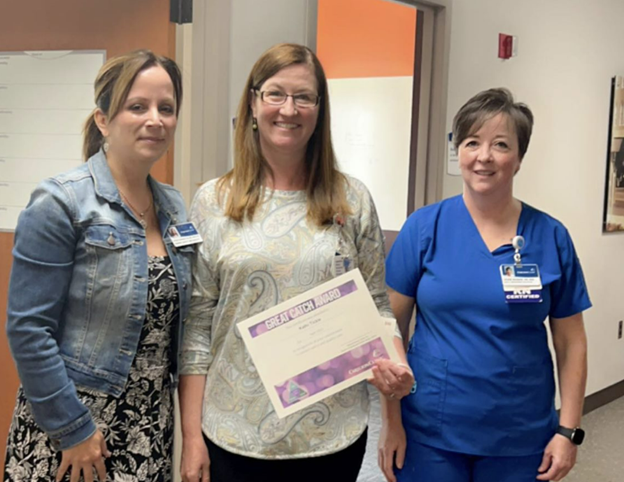
Our Great Catch Awards recognize employees who identify and report potential errors or process issues before they can harm patients. Reporting these great catches helps us improve our systems and processes across Carilion to keep patients safe. We gave a number of Great Catch awards during the past few months:
-
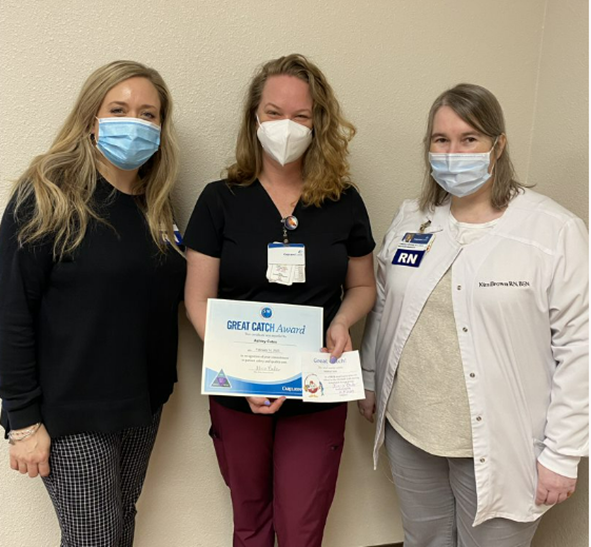
Ashley Cates, R.N., CTCH, recognized that a patient with pneumonia, who was going to be roomed with another patient, did not have a CBC ordered.
-
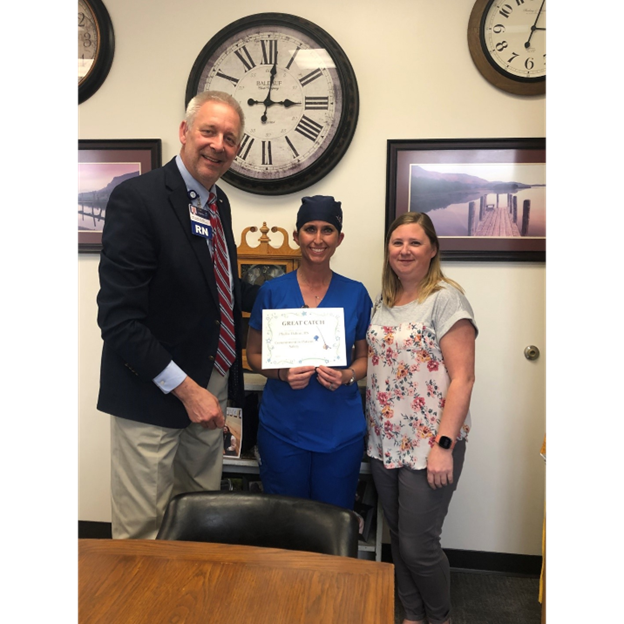
Phyllis Dalton, R.N., CFMH, recognized a medication error on one of her patients and took action to prevent the patient harm.
-
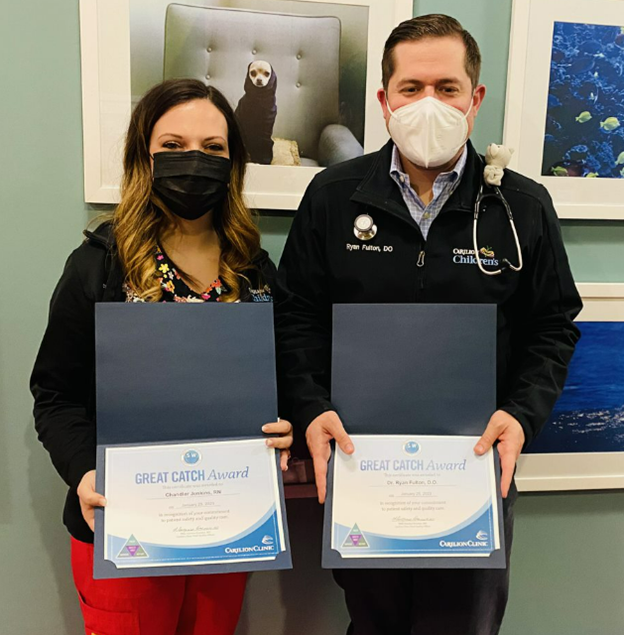
Ryan Fulton, M.D., and Chandler Jenkins, R.N., Carilion Pediatrics – Daleville, are patient-safety champions! Dr. Fulton noticed an error when ordering a medication in Epic. Instead of the intended prescribed chewable antibiotic, a different antibiotic was prescribed and sent to the pharmacy. Dr. Fulton’s quick recognition of the error allowed time to contact the pharmacy, so the correct medication was dispensed to the patient. Chandler reported the safety concern, which led to TSG evaluating and correcting the antibiotic order in Epic to remove the incorrect option and prevent future occurrence.
-
Cheryl Guilliams, R.N., CFMH, demonstrated keen situational awareness by recognizing a potential security threat to CFMH.
-
Emory Jones, R.N., CRMH 1S Infusion, noticed (prior to an infusion administration) that the drug label on the medication she pulled from the Pyxis did not match the medication that was ordered for her patient. She pulled Gammunex- C; the ordered medication was Gammaguard. Emory did a double verification and scanned the drug in the MAR to confirm it was incorrect. She rechecked the Pyxis to find that the incorrect drug was loaded and informed the pharmacy of this error, so the right medication could be provided for her patient and loaded into the Pyxis. Attention to detail and following medication safety steps saved this patient from receiving incorrect medication, and Emory’s report led to a process change of modifying the name on the medication label to prevent future mix ups.
-
Carlea Long, Dining and Nutrition, CNRV, was delivering a tray to a patient when she recognized the patient was not appropriately responding. She immediately notified the nurse to help and a Rapid Response and Stroke Alert was called. Quick intervention by the team ensued. With treatment, the patient experienced a good outcome and prognosis.
- Ashley Mays, R.N., CRMH 11S PICU, recognized (prior to drip infusion) that the Narcan drip in the Alaris pump library did not match the ordered concentration, so she chose the drug calculation feature to accurately dose her patient. The Epic order was for mcg/kg/hr; the Alaris pump library only allowed for mcg/kg/min. Because of Ashley’s attention to detail and event report, Med Safety and Pharmacy reviewed the Alaris pump library and found the Alaris smart pump data needed to be updated. It was and now the Alaris pump library matches the Epic order.
-
Joseph Moskal, M.D., noticed the medication syringe label was abbreviated and did not contain drug names or dosages. Michelle Kyger, R.N., operating room circulating nurse, reported this concern to the pharmacy. Adam Creggar, pharmacist, quickly re-compounded the medication and placed a patient-specific label that included the drug name and strength on the syringe. Typically, the manufacturer provides the needed medication information on the syringe, but during shortages the pharmacy has to supplement the supply. Reporting this event led to adjusting compounding labels to include drug names and strengths and prevented any opportunity for the incorrect drug or dosage to reach the patient.
-
Carrie Nguyen, R.N., CTCH, noticed that a patient had two orders for the same medication.
-
Michael Saccocci, M.D., CRMH Anesthesia, reported an event in which a type I diabetic patient had a DexCom pump that had to be removed because it was located in the planned surgical field. His report and advocacy for the maintenance of basal infusion rates and intraoperative glycemic control led to the adoption of his recommendations by CARES to implement a new process. Now the pre-surgical testing nurse screens for the location of the insulin pump subcutaneous access and advises the patient to place the access in a new site if the current access point is located near or over the planned surgical field.
-
Wayne Scott, CFMH engineering maintenance, identified that the humidity monitoring and controls through the new construction HVAC system were left off. Regulations require a daily humidity recording and the humidity must be controlled by the HVAC system. Humidity control minimizes the risk of microbial proliferation in the sterile compounding area.
-
Nancy Shrader, R.N., CTCH, recognized that an ordered medication scanned as a different concentration than ordered, when it was actually the same concentration as ordered.
-
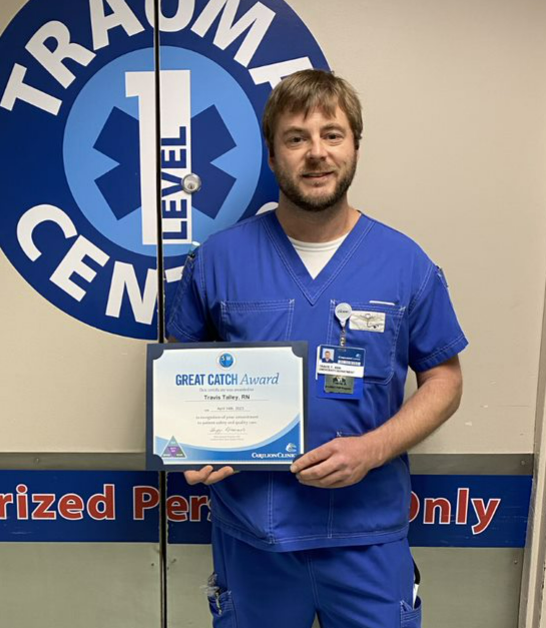
Travis Talley, R.N., CRMH ED, was attempting to remove one medication from the Pyxis when he noticed that a different medication was easily removed. As a result, Pharmacy is reviewing opportunities to increase safety when overriding medications. Travis also reported a new double override that caused delays in removing emergent medications. The Pyxis override had recently been updated and Pharmacy was unaware an incorrect double global override was in place. This was fixed after the Pharmacy was alerted, but could have caused significant delays had it not been reported.
-
Kathi Tickle, Pharm.D., CNRV, was reviewing a patient's insulin orders and nutritional intake when she realized the patient would benefit from a change in insulin coverage to include nutritional and corrective. Kathi corresponded with the provider and the blood sugar control was optimized.
Have a Great Catch To Report?
Our work to improve patient safety never ends! If you identify a potential error or process issue, report it so we can learn from it and prevent any patients from being harmed. If you have a Great Catch to report, there are two ways to report it:
- Go online to SafeWatch—access it through the icon on your computer's desktop or through the SafeWatch Reporting hub (formerly called the Event Reporting hub).
- Call the event reporting phone number, 540-981-SAFE or 7-SAFE. Calls will be forwarded to the Quality and Patient Safety contact at the facility where the event occurred.
Questions?
To learn more, visit the SafeWatch Reporting hub, If you have questions, ask your manager or the Quality and Patient Safety contact at your facility.
- CFMH: Kimberly Robertson, kbrobertson@carilionclinic.org
- CGCH: Jennifer Bailey, jdbailey@carilionclinic.org
- CTCH: Alicia Bales, asbales@carilionclinic.org
- CNRV: Tiffany Morrison, tlmorrison@carilionclinic.org
- CRBH: Finley Waddell, fmwaddell@carilionclinic.org
- Roanoke campus and ambulatory and non-clinical locations: Branden Robertson, brrobertson@carilionclinic.org
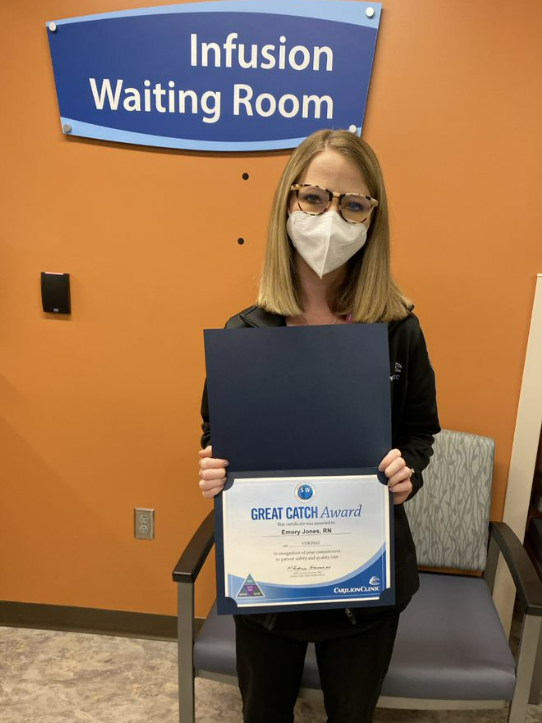
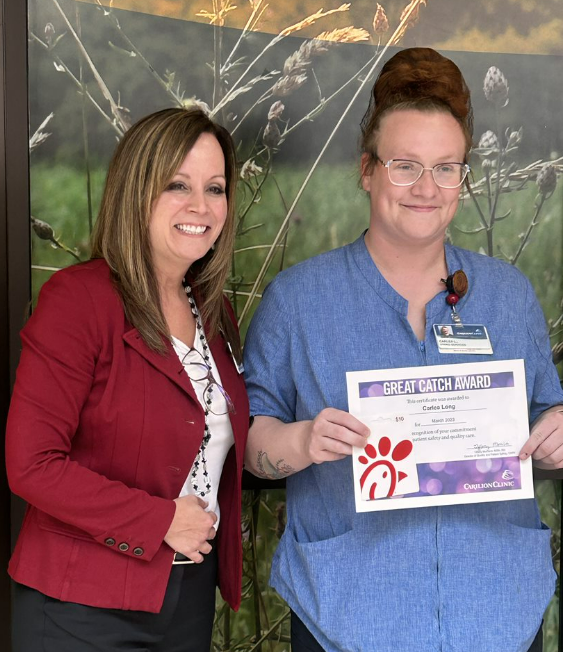
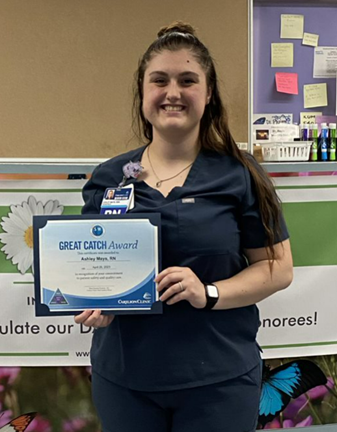
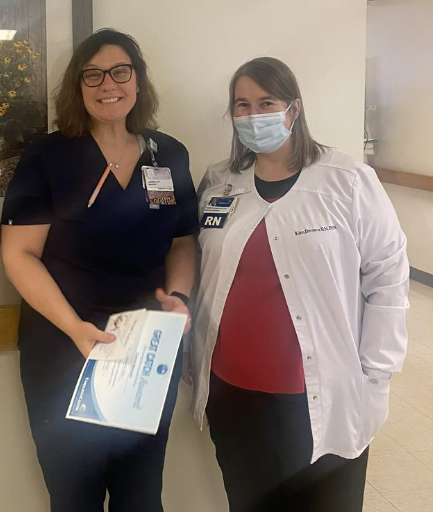
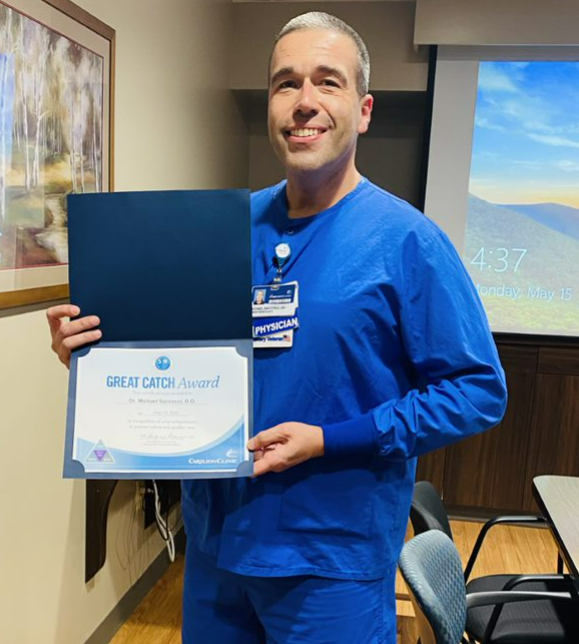
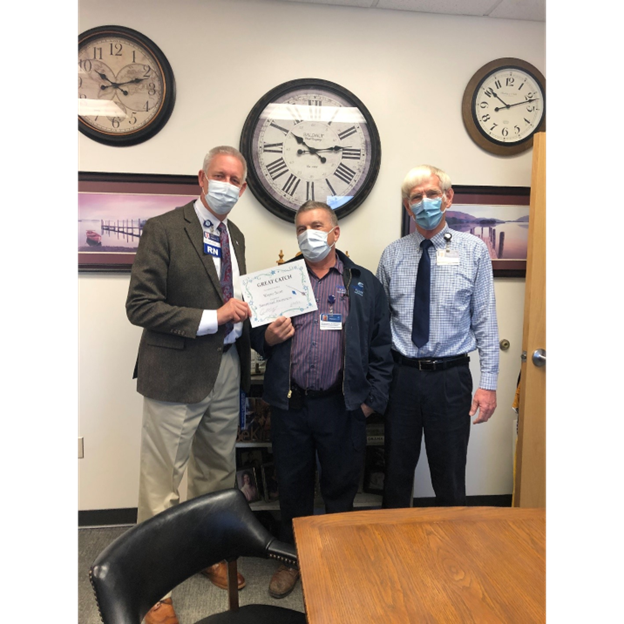
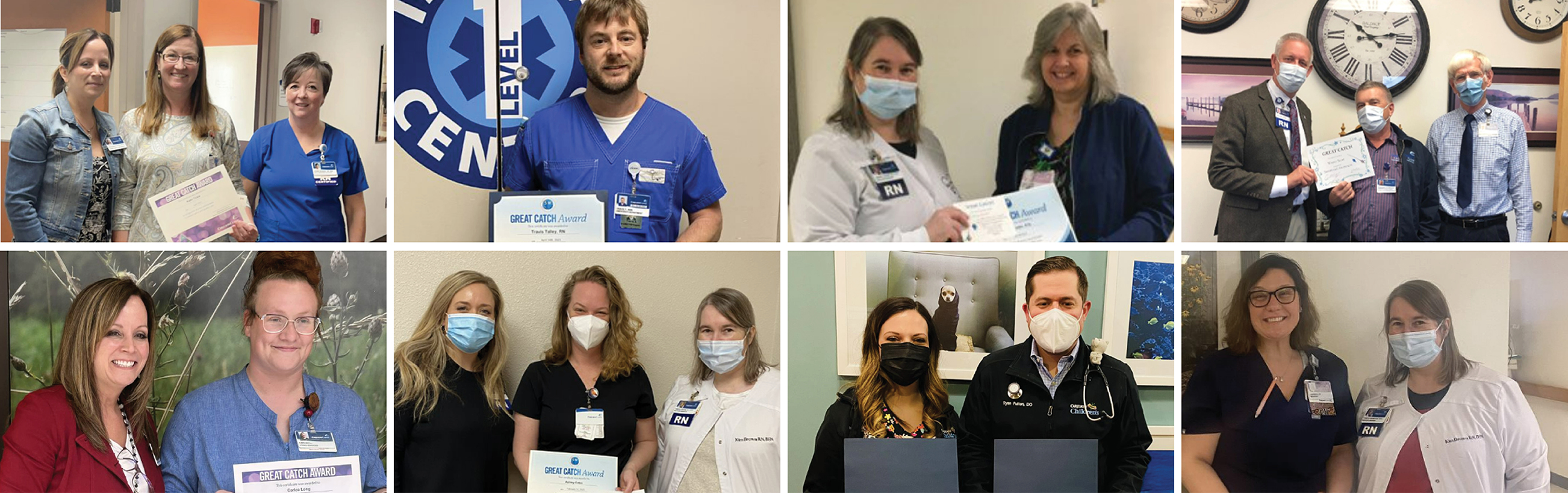
Great Catch Awards recognize employees who identify and report potential errors or process issues before they can harm patients.
These reports help us make improvements to keep our patients safe.
If you have a Great Catch to report, use SafeWatch or call the 7-SAFE line.
