Therapy That Creates Music From the Heart
Music therapy is one of many methods that our health care teams use to help our patients on their journey. Using music-based interventions—such as playing instruments, writing and singing songs—our board-certified music therapists help patients reach therapeutic goals: including, social, communication, physical, spiritual or mental health goals.
This can mean helping patients express difficult emotions through music or regain skills that were lost due to traumatic injuries.
“In Hospice, music therapy is often implemented for pain management, relaxation or to help a patient come to terms with the loss of their abilities or anticipatory grief,” says Kelly Sweeney, music therapist, who works with our Hospice patient population in the NRV.
She’s worked with patients from eight months old to 105 years old, with cases that have lasted for months at a time or as little as a few hours.
“It looks like we’re just playing or talking about music, but there’s so much more underneath it,” says Kelly.
In addition to being well-versed in different genres of music and proficient in singing, playing piano, guitar and percussion instruments, a music therapist is also trained in neuroanatomy, psychology and counseling.
“It’s what our patients need in the moment—if they need to be sad or need to deal with something hard, I’m the container; the music and I create the container for that to happen,” adds Kelly.
For our end-of-life patients, we are one of a few health care organizations that offers the Heart Legacy Program.
In the program, our music therapists take a digital recording of a patient or multiple individual heartbeats, then create a song using the heartbeat as the base. Depending on how much the patient can contribute, the process could include writing a song with the patient or having a family member choose a song that their loved one’s heartbeat can be used in.
While not offered to all patients, the Heart Legacy Program is one of many tools that our music therapists can offer based on a patient’s needs. On that same note, music therapy is not an appropriate form of therapy for all—a referral is needed, and an initial assessment must be made.
After Jessie Palmer, CRMH-based music therapist, recently delivered a completed Heart Legacy song to Carolyn Whitley, a former patient's wife, Carolyn shared these kind words:
“Music therapy made Don happy, relax and participate in something he loved. Music has always been a big part of his life. We thank God for our Hospice family, and they will remain my family now.”
Watch the video below to see and hear how Kelly and Jessie turn heartbeats into music.
For more information about our music therapy program, contact Kelley Sweeney, Hospice, at kjsweeney@carilionclinic.org.
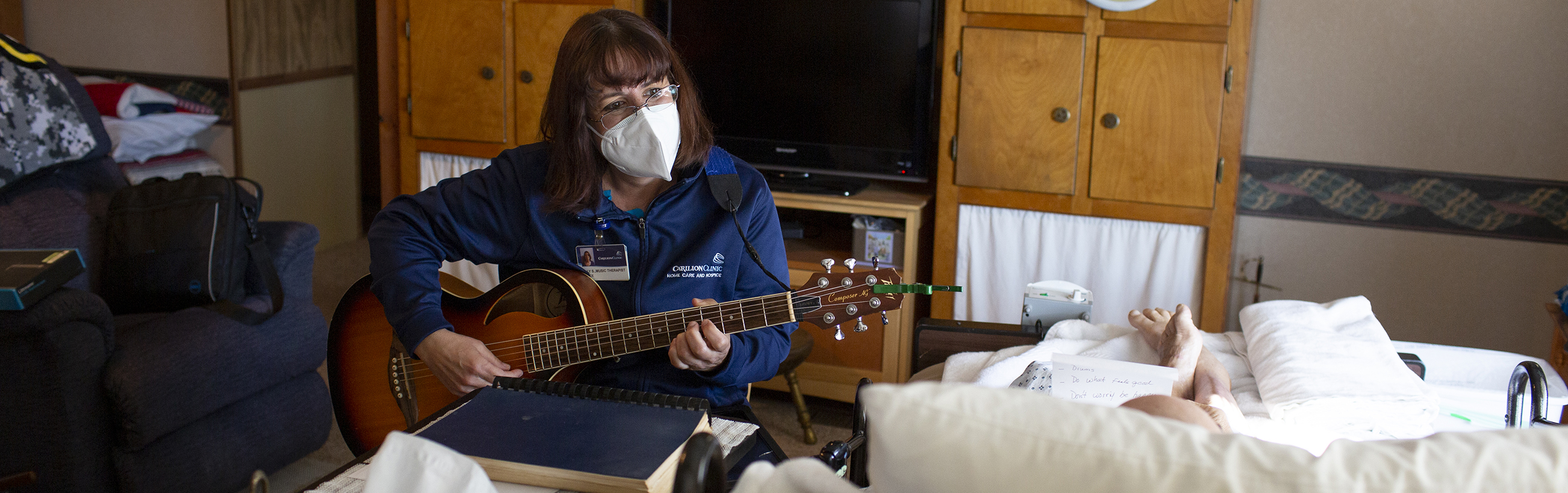
For Hospice patients who qualify for the Heart Legacy Program, our music therapists can record their heartbeat and put it to music.
We currently have five music therapists in our Hospice and Adolescent Behavioral Health programs.
The team that helped start our Heart Legacy Program won the Curiosity Award at the 2022 Shine Awards.
