Our Human Factors Department Is Expanding Their Services
Our Human Factors Center of Excellence is a consultative service aimed at improving safety, efficiency and effectiveness of care delivery through proactive system design methods. The team is located at our Center for Simulation, Research and Patient Safety.
Human Factors science asserts that mistakes and confusion are a result of poor system design, not a careless user. Unintended outcomes can be limited or eliminated by understanding workload, fatigue, environmental factors, ergonomics and task complexity and making adjustments to align these risk factors with human capabilities.
A short video on our YouTube channel further explains Human Factors.
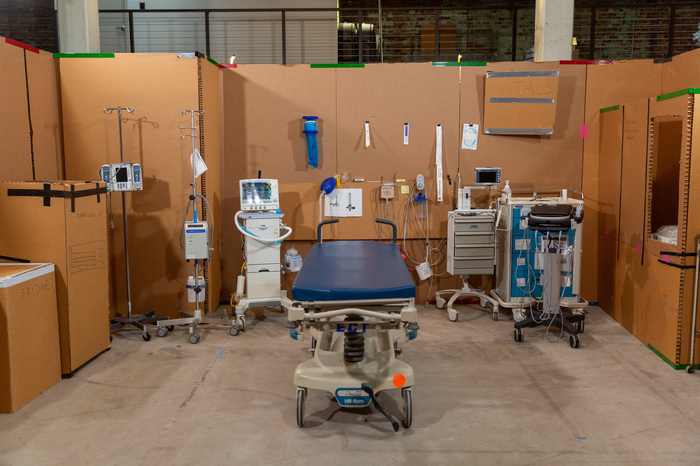
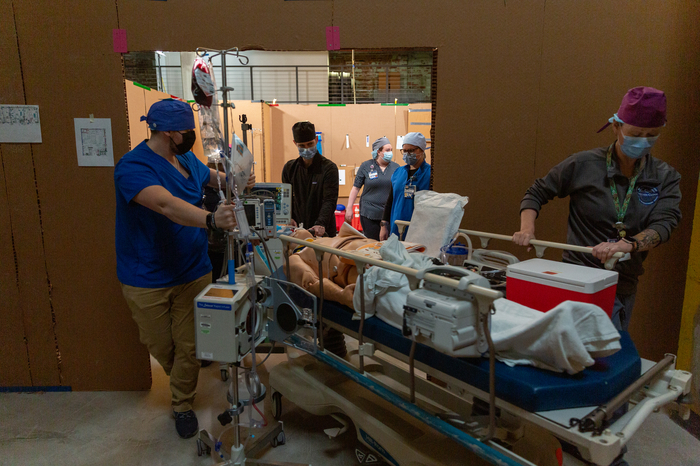
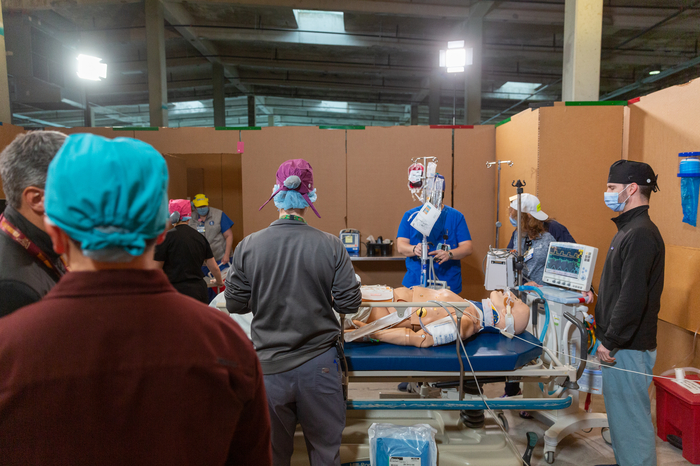
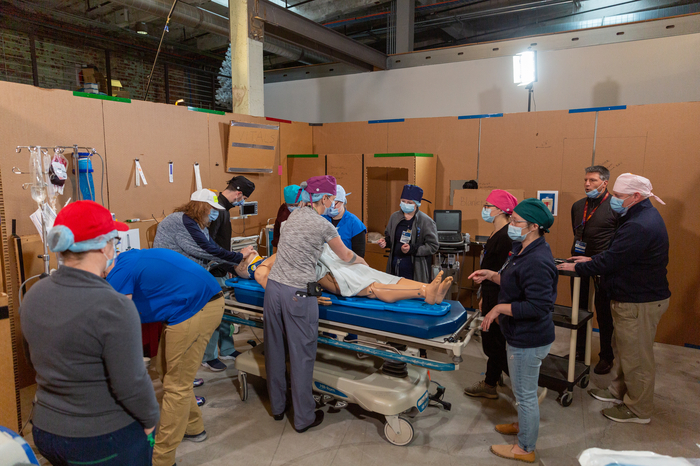
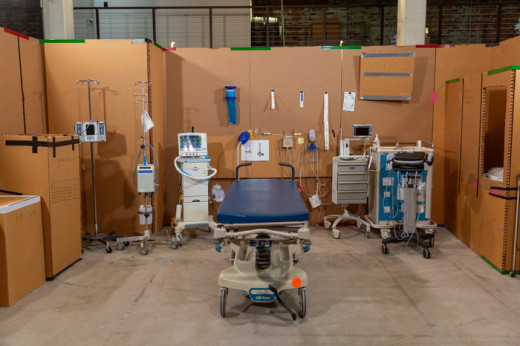
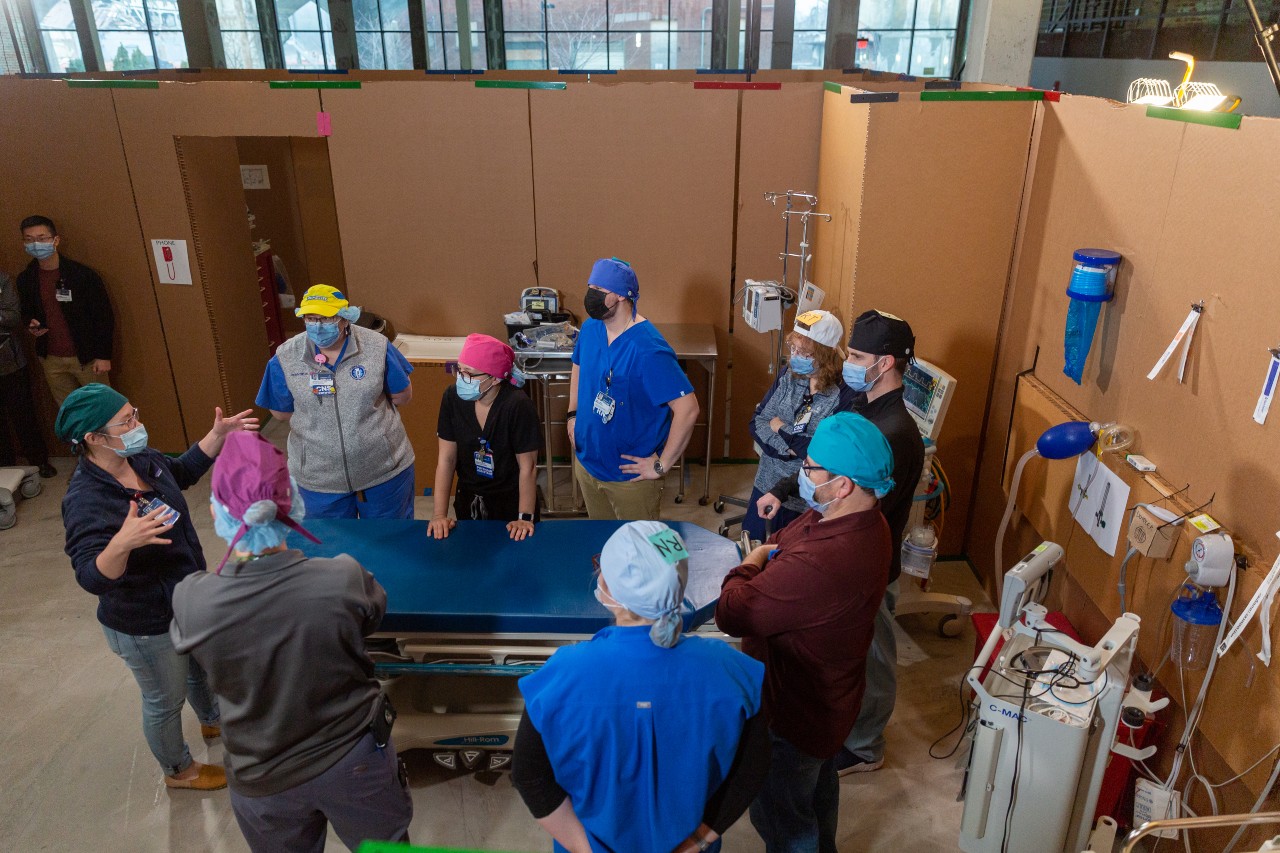
The Human Factors team recently collaborated with members of our Enterprise Project Management Office (ePMO) and Trauma Leadership on the new trauma bay design for the Crystal Spring tower construction project. Simulations were executed in low-fidelity, full-sized mockups by trauma team members to identify potential challenges with the physical space, and to use data-driven methods to propose updates for the space design. The Enterprise Project Management Office (ePMO) provides project management support on strategic, enterprise-wide projects.
“In addition to our collaborative work with Quality and Patient Safety, we aim to embed Human Factors consultation in the workflows of many of our operations and imperative support departments like TSG, construction and procurement,” explained Laurie Wolf, director of Human Factors Implementation. “We also respond to requests from frontline and departmental leaders."
Engaging with Human Factors early in the planning stages of these type of projects can increase the strength of interventions they recommend, without hindering the project’s timeline.
Steps for the simulation of the new trauma bays included:
- Constructing a full-size, inch-perfect cardboard replica of the environment in the Sim Center backspace using architectural blueprints, and inserting as much real equipment as possible from the Sim Center trauma bay.
- Giving leadership and frontline staff the ability to conduct a simulation in real time in the mocked-up space. This way, staff could move through the space doing their normal work tasks, and the team gets a deeper understanding of where equipment should be located and any challenges with the current design.
- Getting feedback and rearranging the room in real time before running the scenario again.
- Analyzing overhead video to identify “bumps” and pinch points for discussion with leadership.
- Comparing layouts for efficiency and effectiveness.
“Typically, simulation is used to assess and improve medical decision-making or dynamic teamwork; however, another use of simulation is to create a mocked-up workspace representing new facilities so members of the team can work through a typical medical scenario in the proposed workspace and provide recommendations prior to the final completion of such workspace," explained Dr. Bryan Collier, chief of Trauma Surgery. "This clinical input coupled with the unique experience within the Simulation Center likely will provide not only better clinical outcomes, but also save money on change orders or purchases that would not be needed.”
If you're interested in contacting our Human Factors team for a project you are working on, or think your area could benefit from a Human factors evaluation, email HumanFactors@carilionclinic.org.
Human factors engineering is a field that applies knowledge about human capabities and limitations to the design of work processes, equipment and environments.
Our team takes what we know about human capabilities and limitations and applies that to design or update work processes to make work easier, faster and safer.
The team provides expertise in physical environment design, device usability and selection, and work process and flow optimization.
