New Program Offers Bedside Support to Trauma Survivors
Our organization has seen an increase in patients impacted by gun violence since 2018. In response, we have launched a hospital-based intervention program for those impacted by violent trauma.
The Violent Injury - Recovery and Support (VIRS) program provides evidence-based strategies within communities, like Roanoke, that are impacted by gun violence by engaging with survivors to prevent and disrupt cycles of violence.
Our VIRS program has two community health workers who are trained as violence intervention specialists to support survivors of gun violence, assaults and stabbings to improve their physical, social and economic conditions.
Together with community resources, the VIRS program delivers services that:
- Save lives
- Address trauma
- Provide opportunity
- Break down barriers to improve the conditions that drive violence
How the VIRS Program Works
When violently injured patients are hospitalized, VIRS specialists meet with them at the bedside to provide intensive case management. The program then follows the survivors after discharge up to one year.
“Our program has been focused on supporting survivors and addressing the social determinants of health, most often obtaining and maintaining employment and safe housing,” said Valerie Koeppel, M.Ed., VIRS clinical program manager. "They also connect them to mental health and substance abuse services as needed and develop individualized service plans addressing their physical and emotional health and recovery."
The program was grant funded in 2022 by Virginia Hospital and Healthcare Association, along with five other hospitals across the state.
For more information on Carilion’s VIRS program, contact Valerie Koeppel at vkoeppel@carilionclinic.org.
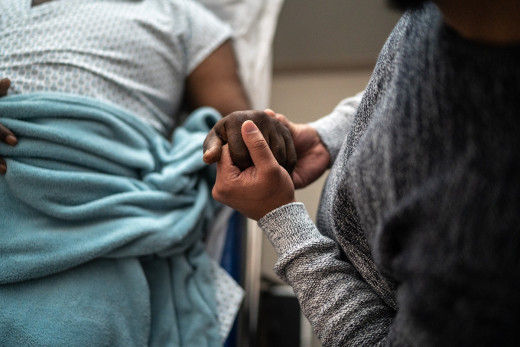
Our new Violent Injury - Recovery and Support (VIRS) program provides support for trauma survivors at the bedside.
Violence intervention specialists engage with survivors of gun violence and other violent crimes to disrupt cycles of violence.
The program follows patients after discharge for up to one year to support them at home and in the community.
