Carilion History: The First 20 Years
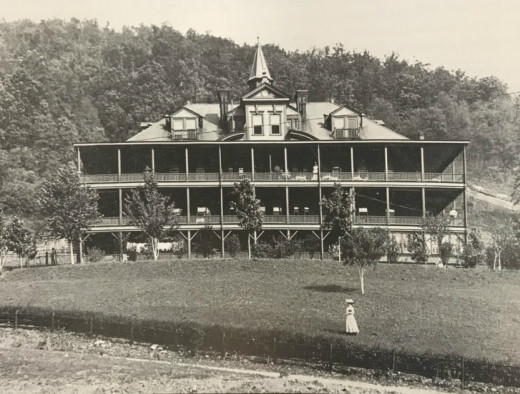
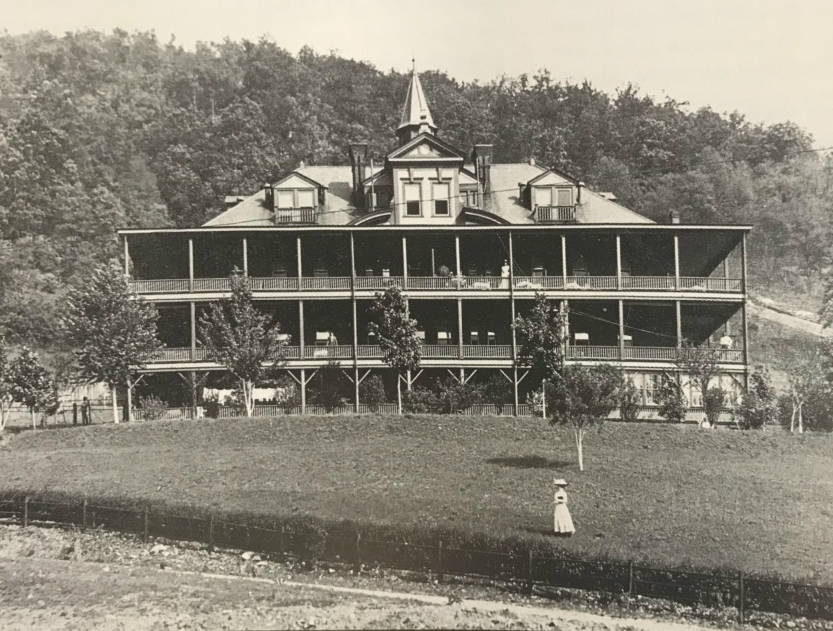
The Roanoke Hospital opened its doors on June 30, 1900, located on the "prettiest spot that could have been selected."
It was intended to benefit all citizens of Roanoke, regardless of their ability to pay.
Here is the continuing story of the hospital, picking up from its opening in 1900 and following the first 20 years.
A Hard Financial Road
In spite of the hospital’s limited capacity, everyone who needed treatment was cared for, and those unable to pay were received as public or charity patients.
At the end of the second year of operation, the hospital had treated 182 patients and had just $14.71 in the bank. Bills commonly remained unpaid at the end of a month.
The cost of serving charity patients made up as much as 60 percent of annual expenses and stretched financial resources. Funding was a continued problem.
School children were asked to bring money to school to donate to the hospital, festivities were planned at city parks to raise money, tag sale fundraisers were held, ministers asked for money from the pulpits, collection baskets were placed in stores and offices and board members contributed their own personal money.
People also gave essential items, such as coal to heat the hospital in the winter, in exchange for medical care.
Room rates were raised and the hospital started charging $5 for operating room use, except for Norfolk & Western (N&W) patients, since the company made annual donations to the hospital and paid for the care its employees received.
At the end of the first decade of operation, nearly 500 patients per year were being treated at the hospital, and the Roanoke Hospital Association had $3.81 in the bank.
By 1920, more than 6,000 days of treatment were being provided to nearly 600 patients a year, at a cost of $3.97 a day.
The Hospital Staff
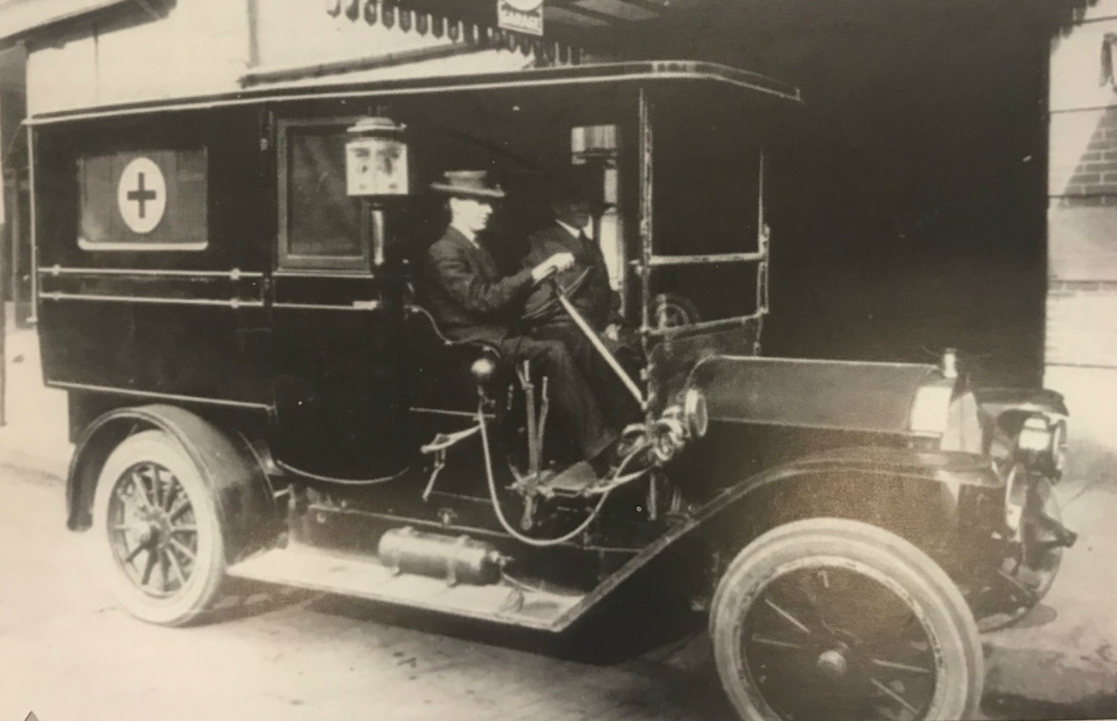
In the year after the opening of the hospital, trustees hired a full graduate nurse to attend special surgical cases. She joined a head nurse, night nurse, five student nurses and five assistants.
The first full-time resident physician—who was also the hospital manager—was hired in 1903 for $75 a month plus room, board and laundry. But the physicians didn’t stay long—there were replacements in 1905, 1907, 1908, 1912 and 1918.
Likewise, new nursing superintendents were appointed in 1902, 1903, 194, 1905, 1906, 1907, 1908 and 1909.
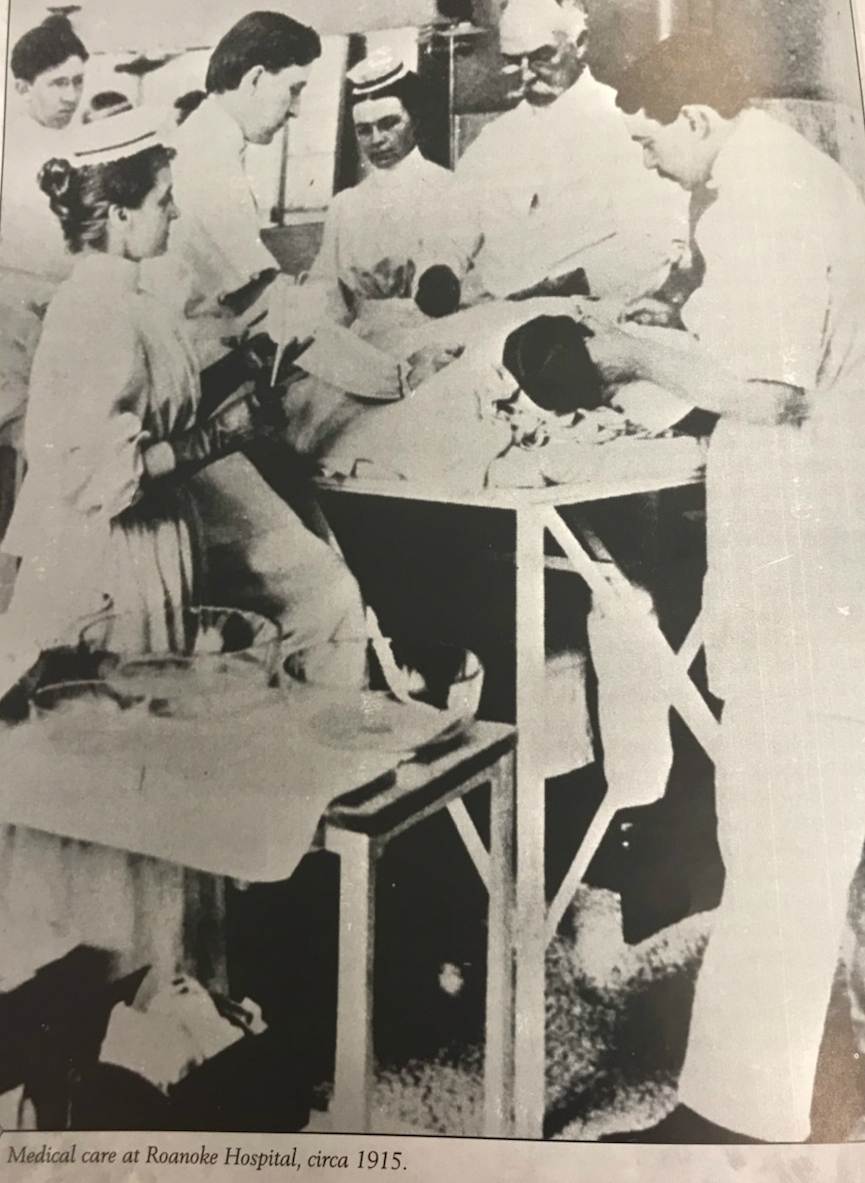
Although medical care at Roanoke Hospital was the best available for the time, techniques were limited and very basic. Immaculate cleanliness and strict hygiene were the limits of infection control.
Two fixed tubs were used to bathe patients—there were no private baths. Bowls and pitchers in each room on a bedside table were standard. Patients were released when they were well enough to walk.
Paying patients were sometimes housed in the staff living quarters.
Overcrowding was a problem, and by 1915 the board decided they needed to improve living conditions if they were going to entice new student nurses. Construction of a separate staff house was underway by the middle of 1918.
Expanding the Hospital
Because the hospital was not able to accommodate all the paying patients at all times with rooms, future expansion was needed for private patients, the only source of profit.
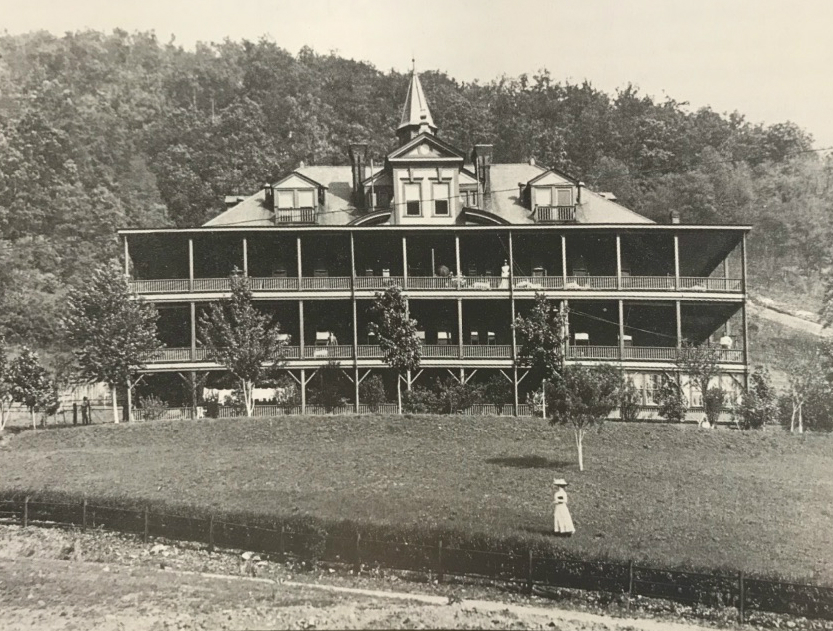
Wide, screened porches were added to the back of the Roanoke Hospital in 1903 so pneumonia and fever patients could be bedded down with blankets and hot water bottles. Doctors considered fresh air treatment to be a way to combat disease.
Remodeling continued throughout the next few years, including adding a third floor and a road encircling the hospital for use by the city’s trolley. The original reception room and office were also remodeled to accommodate more beds, and by 1910 there were approximately 40 beds available.
Because it was the landlord, N&W was in charge of maintenance of the hospital. When improvements and equipment were needed, the railroad stepped up to provide materials and the manpower to install them. In 1911, they installed screens and awnings over the porches at the rear of the building.
In 1915, N&W proposed turning over ownership of the building and grounds to the Roanoke Hospital Association Board of Trustees. The railroad also pledged $4,000 to help improve the building. The board at the hospital readily accepted and the deed changed hands in 1916.
Each time the hospital increased the number of beds, the workload for nurses became greater. The superintendent in 1919 reported that there were only seven nurses for day and night work combined, requiring that three or four nurses wait on patients on three floors for a total of 25-30 patients each.
As the 1920s began, plans were underway to build a memorial hospital honoring those who fought in World War I.
Stay tuned to Inside Carilion for more history!