Carilion History: Polio and Crippled Children
In 1939, at the urging of the Society for the Crippled of Southwestern Virginia, plans were begun for building and equipping a children’s ward at Roanoke Hospital.
Construction did not begin until 1944, just before the most dangerous health scare of the century struck fear into everyone’s heart—polio.
Treating Crippling Diseases in Southwest Virginia
The Society for the Crippled of Southwestern Virginia had treated patients since the mid-1920s through the Outpatient Department of Roanoke Hospital. The Society also established approximately 15 free clinics located throughout the region, staffed by volunteer physicians who rotated services among the sites.
There were no board-qualified orthopaedists in southwest Virginia until the late 1930s; there were only about 20 in the entire state.
Neither transportation nor economic times were easy, making it difficult to provide proper prenatal care for expectant mothers or proper diets for growing youngsters. Families often lived far from medical help, and without medical treatment, many rural communities suffered the effects of childhood diseases.
Polio Comes to the Area
The superintendent of Roanoke Hospital received a call on July 14, 1944, that there were several polio cases throughout the area. The city wanted to use the Isolation Department at the hospital to care for such patients in case the disease spread and became an epidemic.
Doctors who were part of the hospital’s executive committee unanimously favored providing the space, and recommended that the city not use the Catawba Tuberculosis Sanitorium because managing two contagious diseases at one institution was not practical.
By the end of the next month, August 1944, Roanoke Hospital had admitted a total of 76 children with infant paralysis.

The Polio Ward
The isolated area for polio victims had two separate entrances, one for doctors and nurses and the other for the few visitors who were permitted.
Admission to the ward was through the “clean room,” a reception hall cut off from the ward, where visitors donned caps, gowns and face masks. A sign at the entrance carried a “Keep Out” warning and the door was locked.
One of the best-known treatments at the time was the hot pack, used to relieve pain and relax muscles. Strips of woolen blankets were boiled in water and then rung through bedside washing machines. The hot woolen strips were wrapped around legs, arms and midriffs, a layer of oiled silk was added, then another layer of hot blankets. The packs remained hot for about two hours, then the process was repeated.
Toys and amusements were provided for young children to occupy their long hours in the hospital. Roanokers generously donated toys, dolls and books.
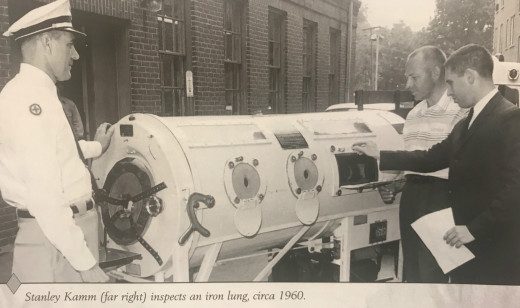
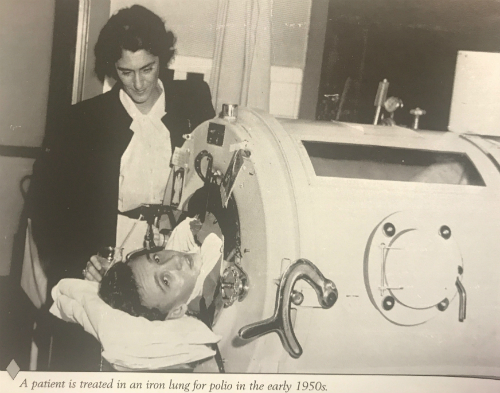
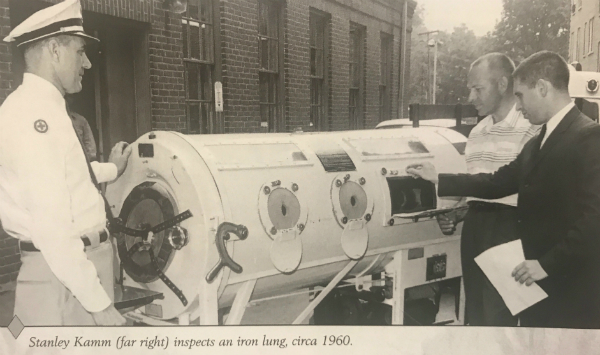
Portable iron lungs were mechanical respirators needed to combat the swift paralysis often affecting a victim’s ability to breathe. The crew of Roanoke’s Life Saving and First Aid Crew would transport the iron lungs to distant locations free of charge for victims to use at home or while being transferred to the hospital.
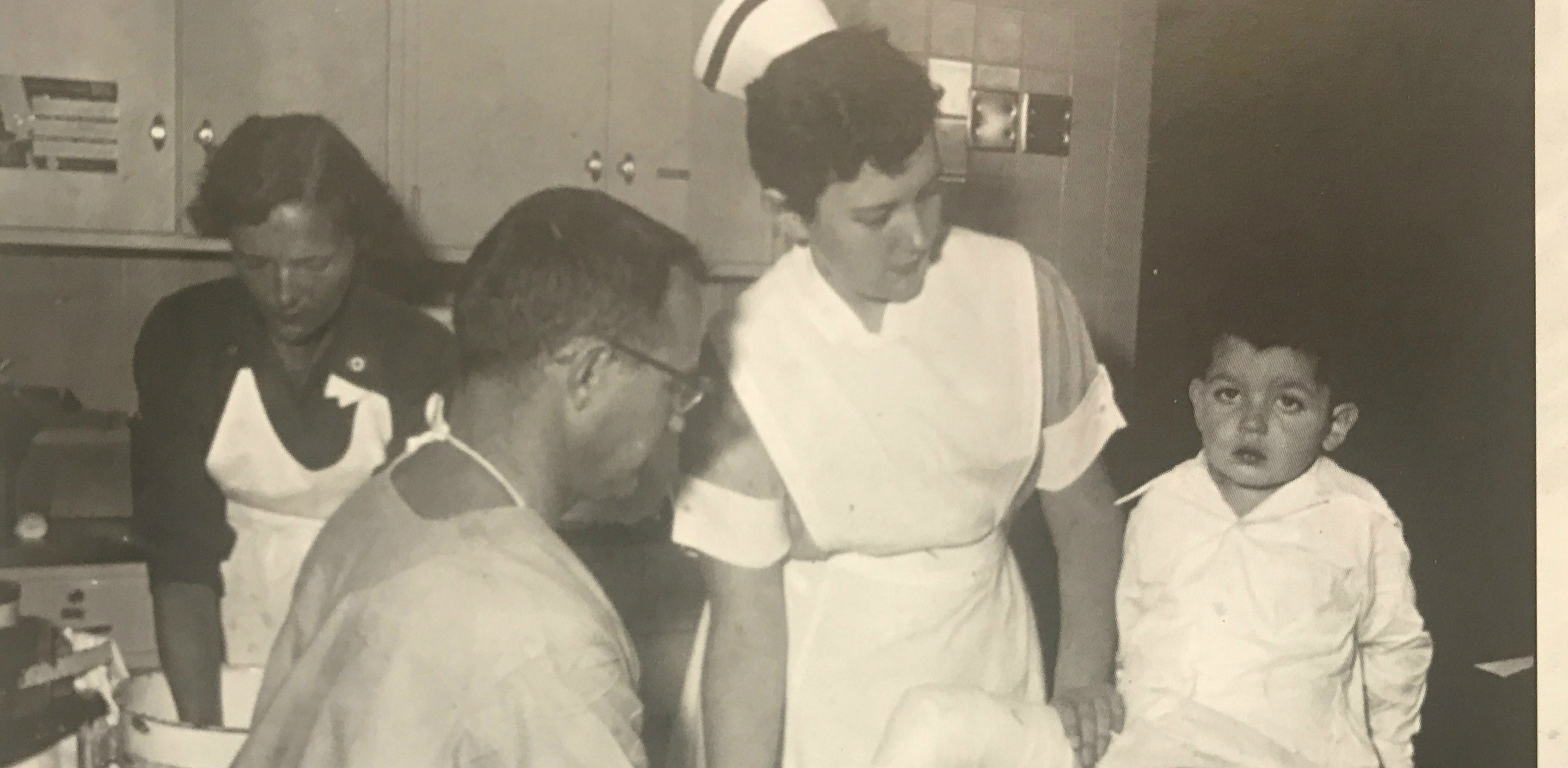
Nurses were always in short supply and worked around the clock in shifts. Aided by the Red Cross, the city recruited 28 nurses from other cities and states to staff the polio wards. Pay for the extra nursing corps came from the National Infantile Paralysis Foundation (which later becomes the March of Dimes), supplemented by state and local aid groups.
Annual figures for Roanoke indicate there were 135 infantile paralysis cases in 1944 (5,357 days of treatment), about five times as many as in other large Virginia cities.
Funding for a New Space
The American Theater in Roanoke had put proceeds from some ticket sales into a fund managed by the Roanoke Foundation for Crippled Children. By 1944, the fund had grown to more than $19,000.
The Foundation offered to transfer the fund to Roanoke Hospital. Construction estimates for a Crippled Children’s Ward were $13,861, and the contractor offered to donate 50 percent of his fee.
The Crippled Children’s Ward was built on the top floor of the Flickwir Memorial Unit and was finished in June 1945.
It included a stainless steel, clover-shaped tank for subaqueous therapy and modern electric hoists to lift patients out of bed into the tank.
The 1950 Epidemic
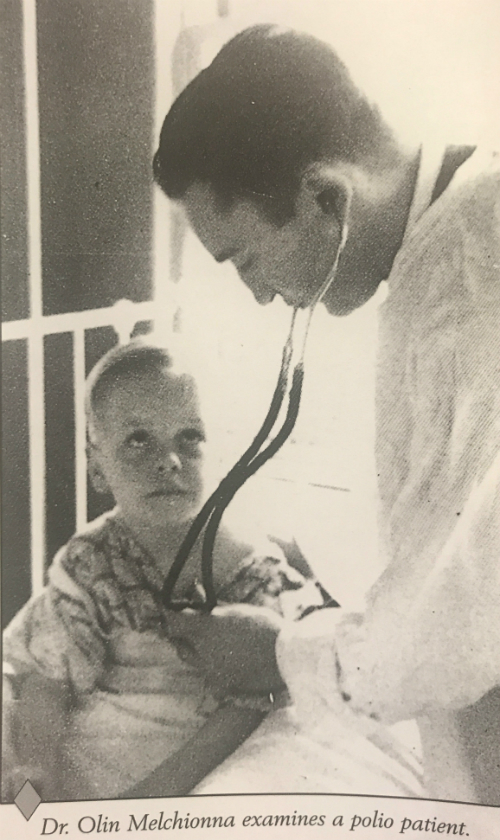
The hospital was pushed to the breaking point in the summer of 1950, when out of 158 patients in the hospital, 70 had polio.
Medical professionals still didn’t know what caused the disease, and there was little they could do to treat it other than try to comfort the victims.
Electric power surges were common and created a mad scramble to the polio ward. Personnel would pump the iron lungs by hand until the power returned.
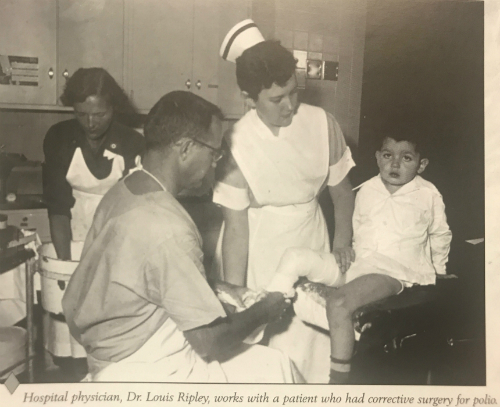
Everyone worked to the point of exhaustion. Student nurses worked in shifts with bedside oxygen tanks and rocked beds to assists patients’ breathing.
The entire first floor of the hospital was turned over to polio patients, and patients in iron lungs were even in the hallways.
The annual number of polio hospitalizations ranged from a low of 98 in 1948 to a high of 450-500 in 1950. Hospitalizations dropped as low as 30 in 1957 and then soared to 100 in 1959.
It was not unusual for patients to remain in the hospital for many months. The hospital had a full-time teacher, who conducted classroom studies for hospital-confined children.
Conquering polio was achieved with the introduction of the Salk vaccine. A special committee of doctors was formed in Roanoke in 1957 to urge the public to get immunized.
Not everyone took advantage of the entire series of vaccinations and one last major round of polio occurred in southwest Virginia in 1959. By 1963, no patients were admitted to Roanoke Memorial Hospital for the treatment of infantile paralysis.