Carilion History: CNRV, Part 1
In the early 1900s, the Norfolk and Western Railway was expanding from Norfolk to the west through the New River Valley (NRV).
The railroad opened its own hospital in a two-story frame building in Radford in 1906 with the purpose of getting injured workers back on the job as quickly as possible.
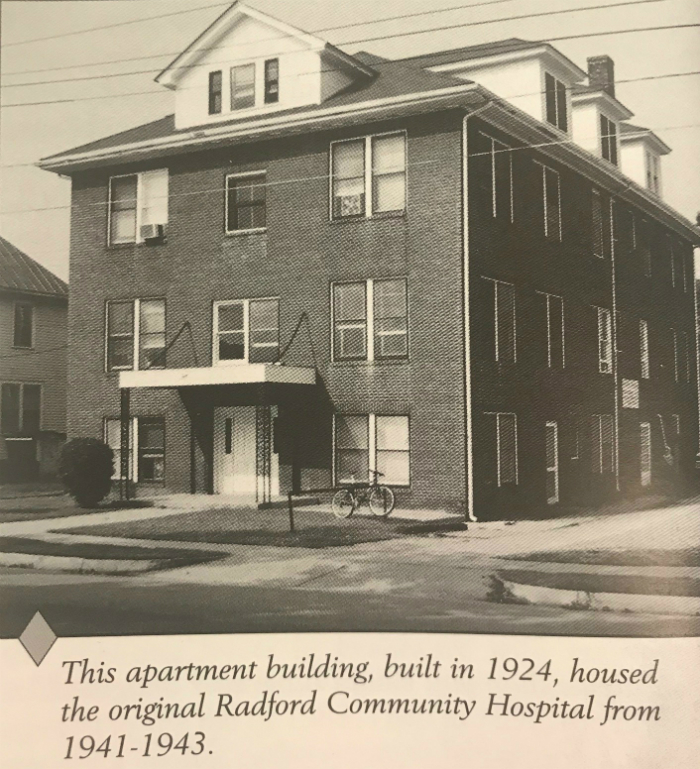
In 1924, a new hospital was built on Tyler Avenue but was unsuccessful and closed within a few years, then Radford was without a hospital for nearly 15 years.
Women in labor were taken out of town or babies were born at home. Emergency victims were often cared for by the local rescue squad.
Boom Town
Two industrial developments in the NRV greatly impacted the area’s economy in the late 30s—Claytor Dam and Radford Arsenal.
The employment demand these created turned Radford into a boom town at the onset of World War II.
By 1941, it was clear a local hospital was needed more than ever. A group of local physicians reopened the hospital that had closed, but the 28-bed facility was inadequate to serve the rapidly growing population.
The next year, Radford received $321,000 to build a new hospital because they were greatly impacted by the war effort.
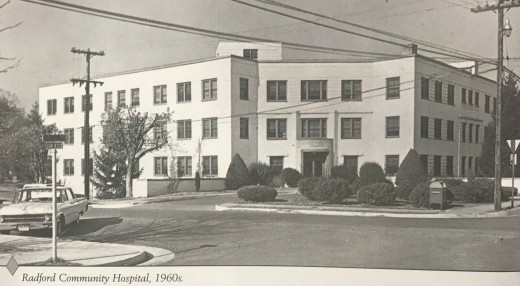
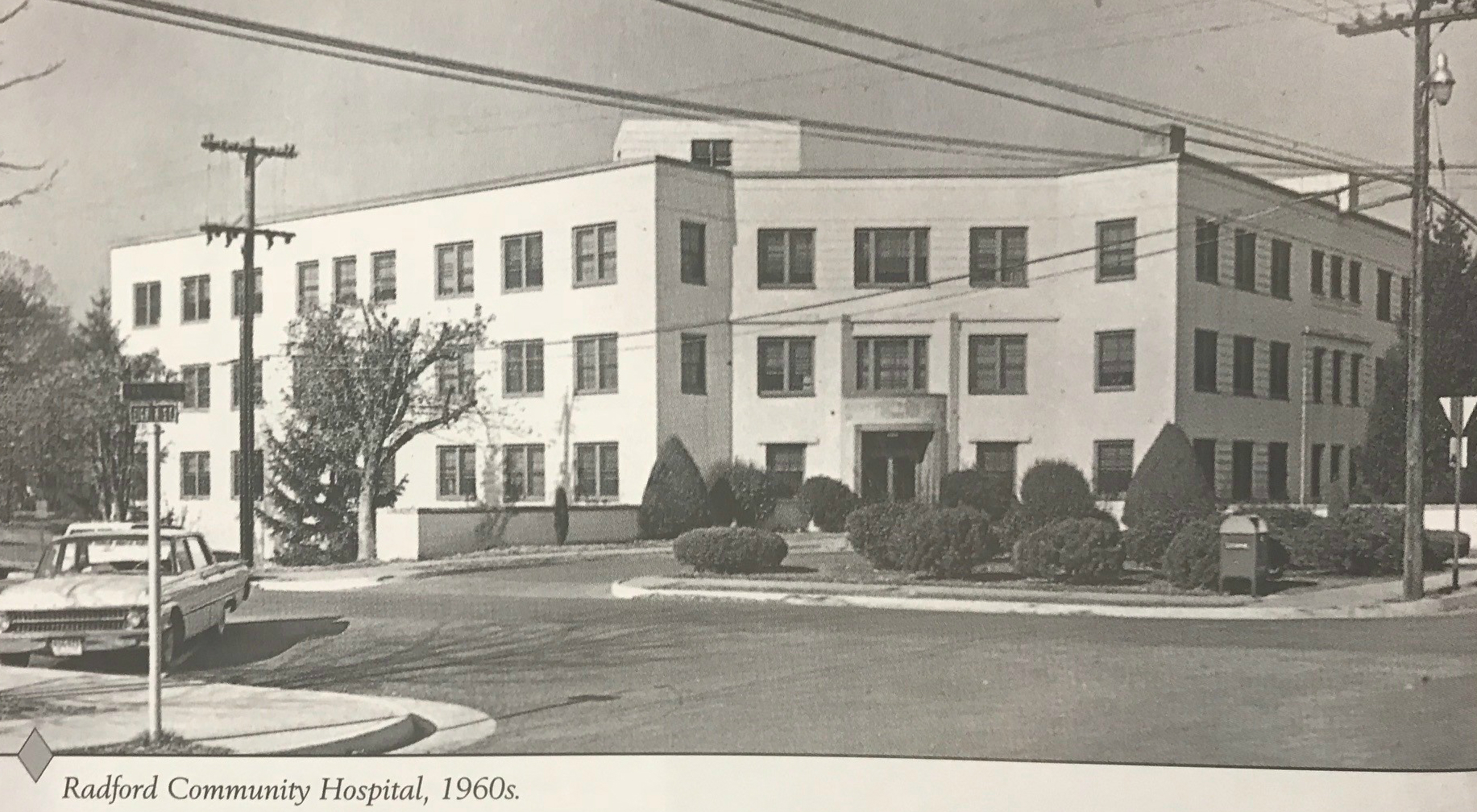
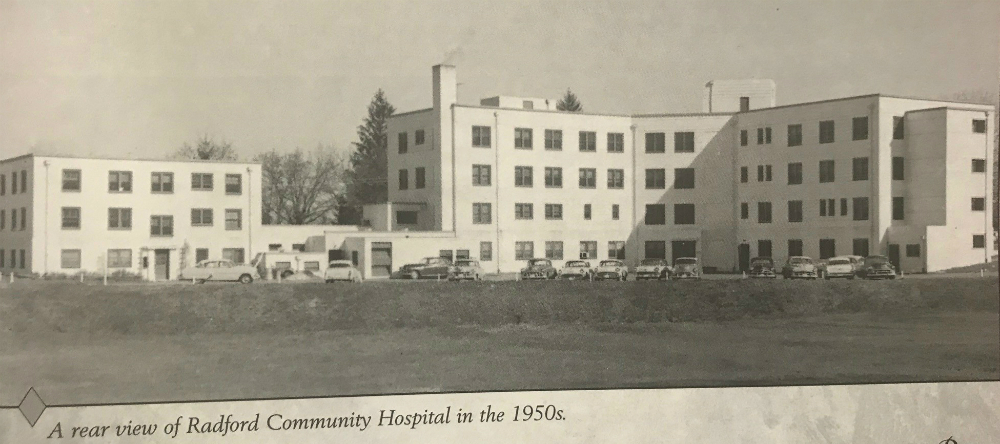
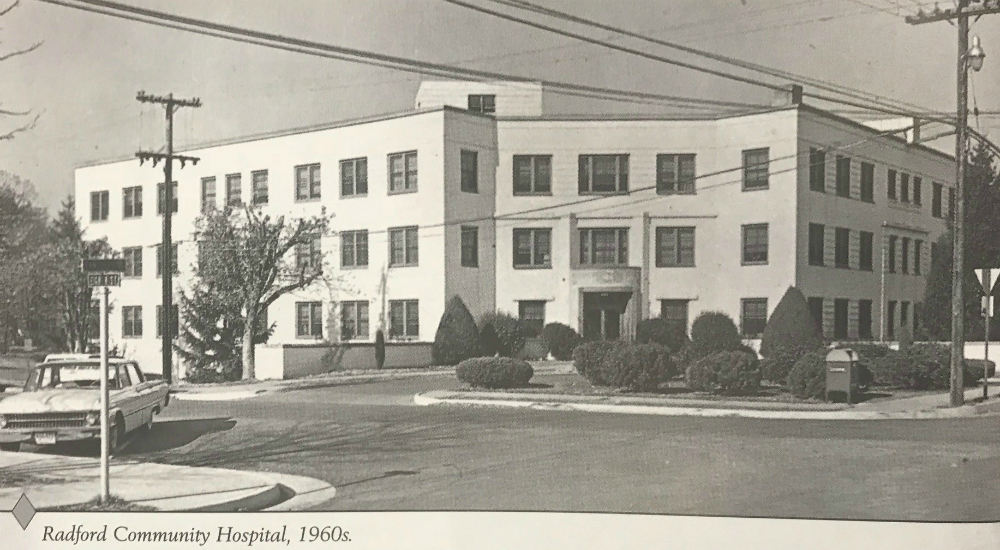
In September 1943, Radford Community Hospital (RCH) opened on the corner of Eighth and Randolph Streets as a not-for-profit facility with 68 beds and 25 paid employees.
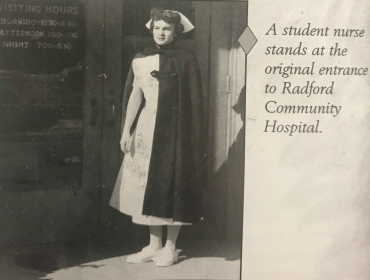
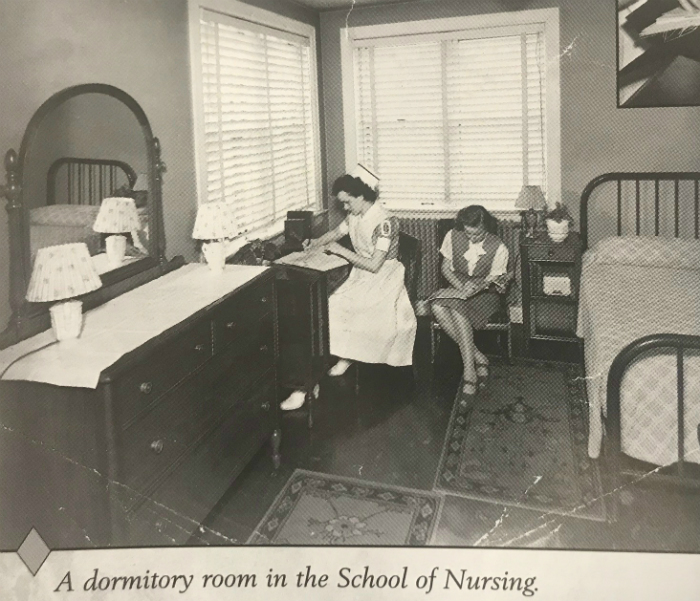
A nursing school was also established, which would train new nurses and help alleviate shortages in nursing personnel over the next 20 years.
Growing Pains
Through the rest of the 40s and into the next decade, RCH earned a reputation as one of the best hospitals between Roanoke and Bristol, and the hospital grew to 85 beds.
RCH took the “Community” in its name to heart, striving to be as much a neighbor as a healthcare provider. The hospital even listed admissions, discharges and births in each issue of the Radford News-Journal, a tradition that would continue until the late 1980s.
In 1953, the hospital took care of 4,814 patients, and its beds were in use 83 percent of the time.
According to the American Medical Association, RCH provided one hospital bed for every 106 residents. The national average that year was one bed for every 284 residents.
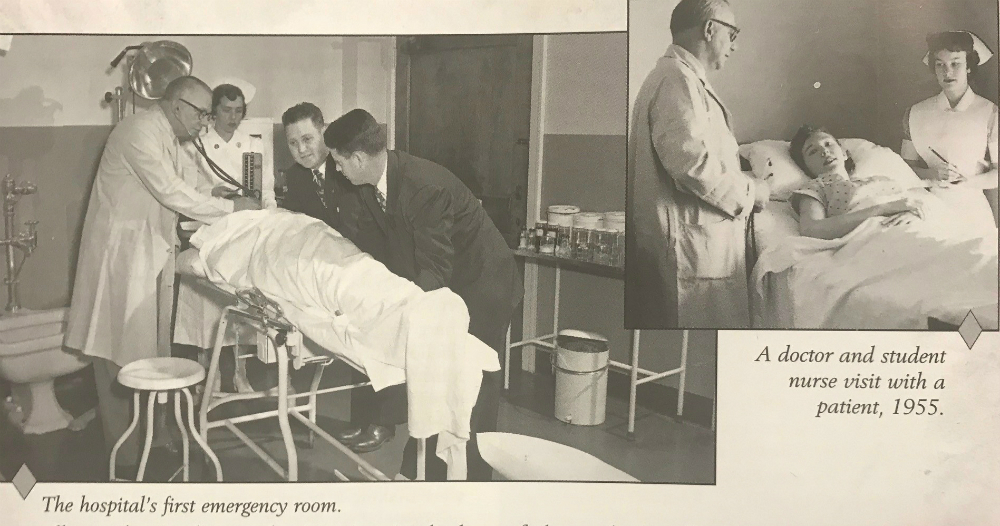
Plans began in 1958 for expansion and remodeling of the hospital, adding 27 new patient beds, air conditioning for one floor, a new phone system and modernizations that would allow oxygen to be piped into patient rooms.
The plans for expansion were slated to cost $325,000. The hospital applied for a federal grant to help fund the expansion and received $169,500. They also received $51,500 from the Ford Foundation.
Just one month short of the scheduled construction completion date, the hospital board of trustees realized they had used all the funds on construction, leaving nothing left to pay for furnishings of patient rooms.
The board sent letters to local industries, individuals and civic clubs in an effort to raise the needed money. In return for giving the $500 needed to furnish each room, a donor would have a plaque mounted in its name outside its “adopted” room.
In just a few months, the money was raised.
In the following year, 1959, 457 patients were admitted and 68 babies were born.
One of the Most Modern Hospitals
Just seven years after its first major expansion, two floors were built atop a wing of RCH in 1965, costing $1.1 million.
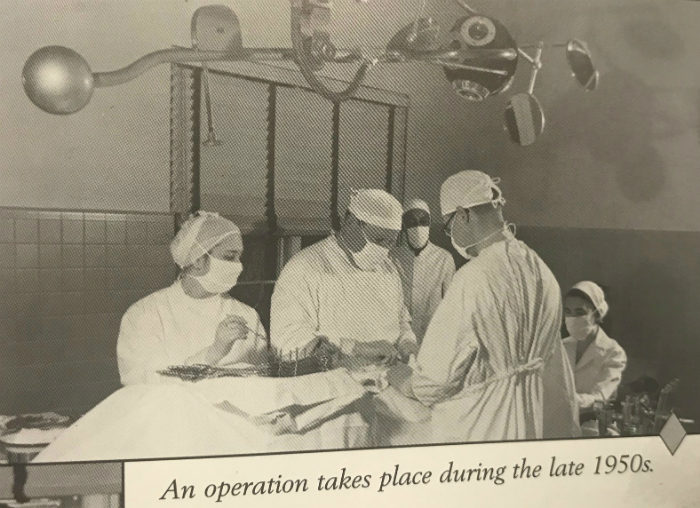
The expansion included 38 new beds to bring the total to 150, plus additional space for laboratories, radiology, operating rooms and labor and delivery rooms. A new emergency room, physical therapy department and dietary facilities were built, plus a new lobby, admissions office, maintenance shop and chapel.
As RCH grew, so did its medical staff. There were:
- 21 physicians (plus 14 on courtesy staff from the area)
- Four obstetricians
- Two pediatricians
- Three internists
- Three surgeons
- Two radiologists
- One pathologist
- One ophthalmologist
- Five general practitioners
- 60 full-time nurses
- 55 practical nurses
- Nine orderlies
Another expansion was completed in 1970, a $1 million wing that increased the number of beds to 222. New X-ray equipment was installed, patient food service was improved and emergency facilities were expanded to handle over 1,000 cases a month.
New Leadership
Executive director George Poff had been with the hospital through its transformation from the original 28-bed facility on Tyler Avenue to the modern, well-equipped institution that had been expanded twice. After 29 years, he retired in 1970.
As a retirement gift, the staff gave him something he could use in his retirement years working his farm in Floyd County—a heifer cow.
Later that year, Lester L. “Skip” Lamb was named executive director of RCH.
Lamb brought a number of progressive ideas on board with him, including a concept that was very forward-thinking at the time: measuring customer satisfaction.
All patients were asked to complete a form evaluating the hospital’s services on a scale of poor to excellent, covering such areas as their general impression of the hospital, food quality, treatment by both clinical and non-clinical hospital personnel, their daily schedule and hospitality to visitors.
Stay tuned to Inside Carilion and your ePulse for the continuing history of CNRV and Carilion!