An Interview with Dr. Louis Ripley—Part 2: From Segregation to Service for All
Dr. Nathaniel L. Bishop, former Carilion chief diversity, equity and inclusion officer, interviewed Dr. Louis Ripley, a retired orthopaedic surgeon in February 2005. Dr. Ripley was raised in Roanoke and returned to open a surgical practice following training and serving in the US Navy during World War II. He regularly saw patients at Burrell Memorial Hospital and had first-hand awareness of Burrell’s role in the community during segregation. Here are excerpts from Dr. Bishop's interview.
Can you describe what you recall of Burrell’s social role and status in the community (in addition to providing medical care)?
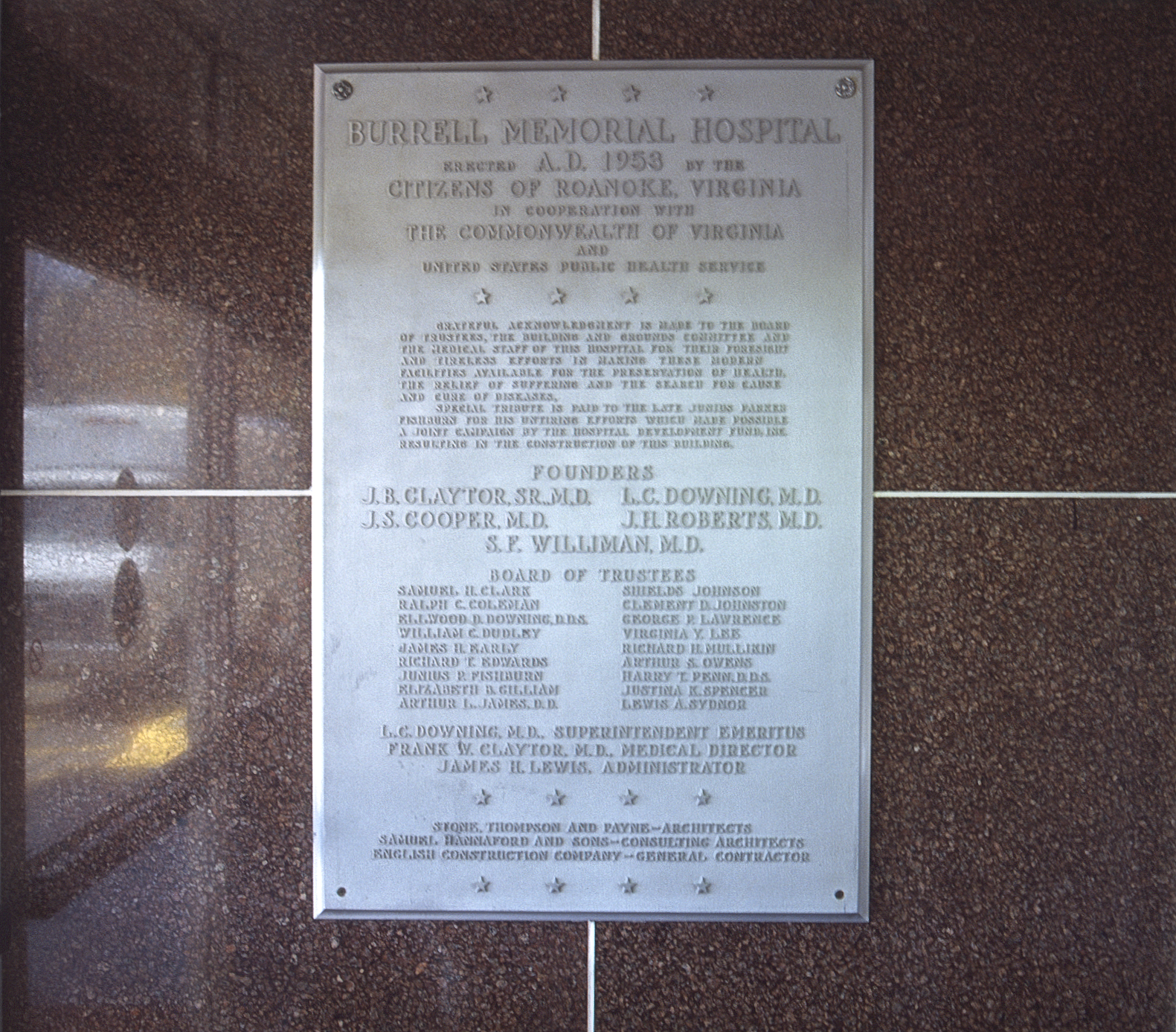
“Burrell was the only Black hospital around, so it was absolutely essential. The professional personnel were the pillars of the community and the leaders in the Black community and the nurses and administration. They were all top-quality people. When I came into practice, there were 7 Black doctors. Orthopaedic surgeons Dr. Trout, Dr. Bray, and I served over at Burrell from 1948 to 1956 after the new hospital was built.”
When integration started in the mid-1960s, African Americans began using formerly white-only hospitals, affecting Burrell's business. Do you recall discussions about this issue?
“After integration, ambulances began taking patients to Roanoke Memorial instead of Burrell. As Black patients increasingly chose Roanoke Memorial—especially after Burrell's Emergency Department closed—more elective surgeries shifted there, which definitely had a negative financial impact on Burrell.”
Did you perceive tension in the days following desegregation and the admittance of Blacks to the former whites-only hospitals?
"I never recall the first experience of anything like that. In early 1949, the hospital administration started conversations with the doctors about a new hospital and were requesting donations. In those days, I was focused on providing for my wife and children. They were talking about building a new hospital and I wondered why they didn’t build a wing on Roanoke Memorial so Burrell patients could be treated there, as the old building was hard to keep up.
Dr. Bray, Dr. Trout and I combined our practice, and we went to Burrell and saw patients there—none of the doctors there were orthopedists. Some of the doctors at Roanoke Memorial did not see Black patients at all. Some saw them, but they had to come in through the back door. When I began with Dr. Wescott, we had one waiting room and it was for all.
We had 7 Black doctors at Burrell. They were really hurting for space at the old Burrell and the building was old. Sometimes when it was hot in the summer and you had patients to see, I was young and rather than go all the way around, I would go out the door to the area where my next patient was and just step through the window!
They had a really good, solid institution at Burrell, but they ran out of patients."
Following desegregation, when African Americans could be admitted to the white-only hospitals, do you know of occurrences in which White patients were admitted to Burrell?
“An ambulance brought a patient from Lexington to Roanoke. The patient was a white woman and when they got to Roanoke at the intersection of Williamson Road and 460, they thought they were going to lose her and decided to continue down the road and went up Fifth Street to the Emergency Room at Burrell. I was on call and treated her. After a few days when she was stable, I got to thinking that it would help to relieve the pressure on Burrell if we transferred her to Roanoke Memorial. The woman asked me if she had to leave because she was happy and very content there. Everyone had been very professional and kind to her and she didn't want to leave. The administrator said it was fine for her to stay, so she stayed there until she was released.”
For more information about the orthopaedic surgeons who played a critical role in desegregating healthcare and expanding access for all in the Roanoke Valley, visit From Segregation to Service for All—The Impact of Roanoke’s Early Orthopaedic Surgeons.
Dr. Louis P. Ripley was one of the foundational orthopaedic surgeons who played a critical role in desegregating healthcare and expanding service for all.
Dr. Ripley regularly saw patients at Burrell Memorial Hospital and had first-hand awareness of Burrell's role in the community during segregation.
Here are excerpts from his interview in 2005 with Dr. Nathanial L. Bishop, former chief diversity, equity and inclusion officer at Carilion.
